
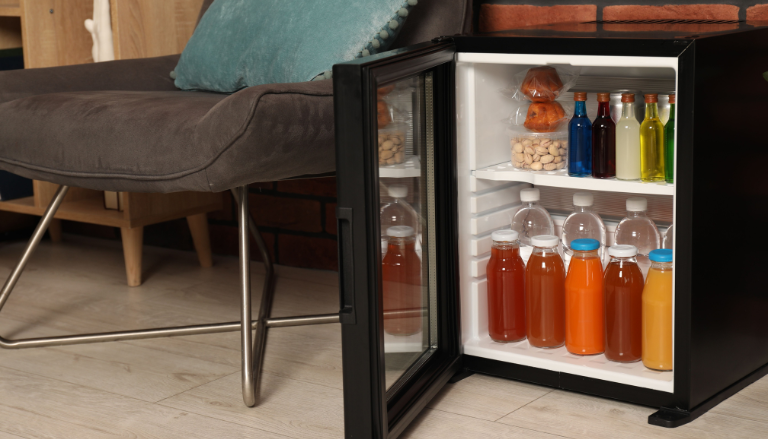
It is 7 p.m. on a Friday. The dining room is filling up, and the bartender reaches into the back-bar cooler for a cold bottle. It is warm. Within minutes, the staff is racing to ice down drinks, guests are waiting, and the owner is wondering how much stock is about to be lost. If you run a bar or restaurant, you already know this scene.
This article walks you through a real bar cooler repair performed on a second-floor bar and shown in our video. You will see what a professional technician checks, in what order, and why a careful bar cooler repair can take a warm unit back to fully cold in one visit. Along the way, we explain how R290 coolers differ from older units, what usually goes wrong, and when it is time to call a professional. At Pappas Parts & Service, we offer complete commercial refrigeration repair for bars, restaurants and food-service businesses, and this visit is a good example of how we work.
The Call: A Brand-New R290 Cooler Down on the Second Floor
The call came from a bar where an R290 under-counter cooler had stopped keeping up. The bar sits on the second floor, so before a single tool touched the unit, our technician had to carry gear up a flight of stairs: a service cart, a blower, hand tools and the electrical test equipment needed to diagnose a refrigeration problem properly. The on-screen text in our clip says it plainly: a brand-new R290 unit was down on the second floor.
That detail matters. Many owners assume a newer cooler cannot fail, but new equipment can suffer from a weak start component, a loose connection, a blocked coil or a controller problem just as easily as older equipment. The answer is accurate diagnosis, not guesswork.
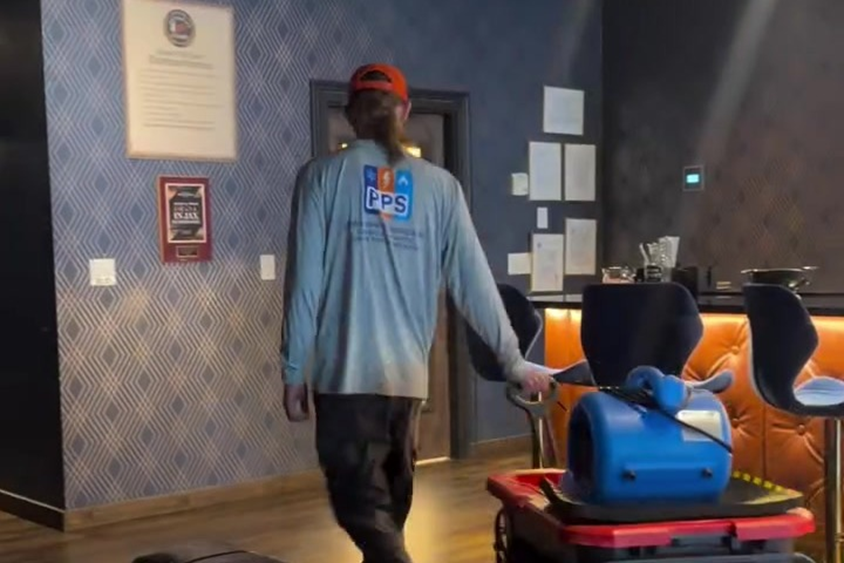
Our technician brings tools and test equipment through the bar to the warm cooler.
Step-by-Step: How the Bar Cooler Repair Went From Warm to Cold
Every bar cooler repair is a little different, but a disciplined process keeps the visit short and the result reliable. Here is the sequence you can follow in the video.
Step 1: Confirm the Symptoms and Protect the Stock
Before opening the unit, the technician asks what the staff has noticed: warm drinks, a controller reading that keeps climbing, a compressor that runs constantly or never starts, or unusual noises. Moving bottles and perishables into another cooler or onto ice keeps product safe while the work begins. Protecting stock always comes first.
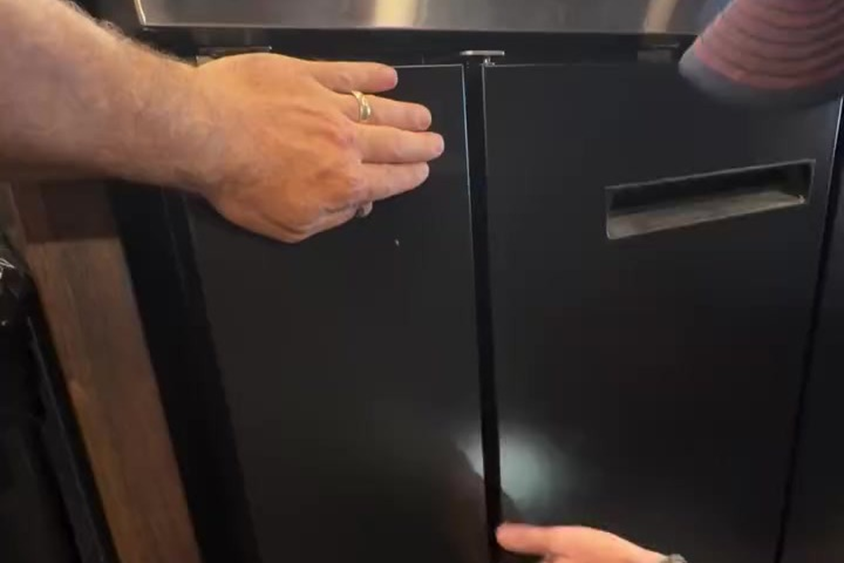
Step 1: confirm the symptoms and check the unit before any parts are touched.
Step 2: Inspect the Wiring and the Condenser Coil
With the access panel off, the technician studies the wiring harness, the connectors and the condenser coil. In a busy bar, dust, grease and lint can clog the coil, which forces the compressor to run longer and hotter. Loose or damaged connections can interrupt power to the compressor or the fans.
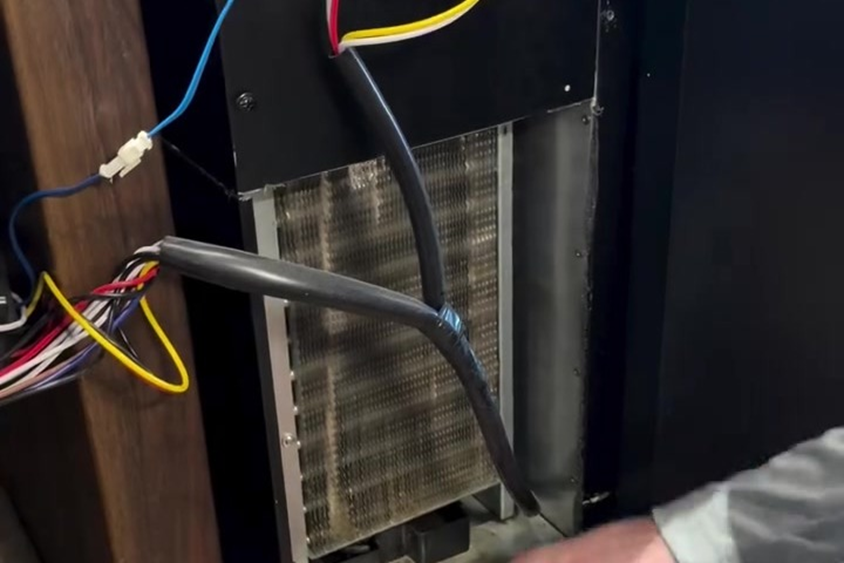
Step 2: wiring and the condenser coil are inspected for damage, dirt and loose connections.
Step 3: Test the Electrical Components With a Clamp Meter
Next comes measurement. The video shows a clamp meter and a capacitor on the floor beside the unit. Capacitors help a compressor motor start and run efficiently, and they are among the electrical parts that can weaken over time. Measuring amp draw and testing components takes the guesswork out of the repair. Instead of replacing parts at random, the technician confirms which component is actually failing.
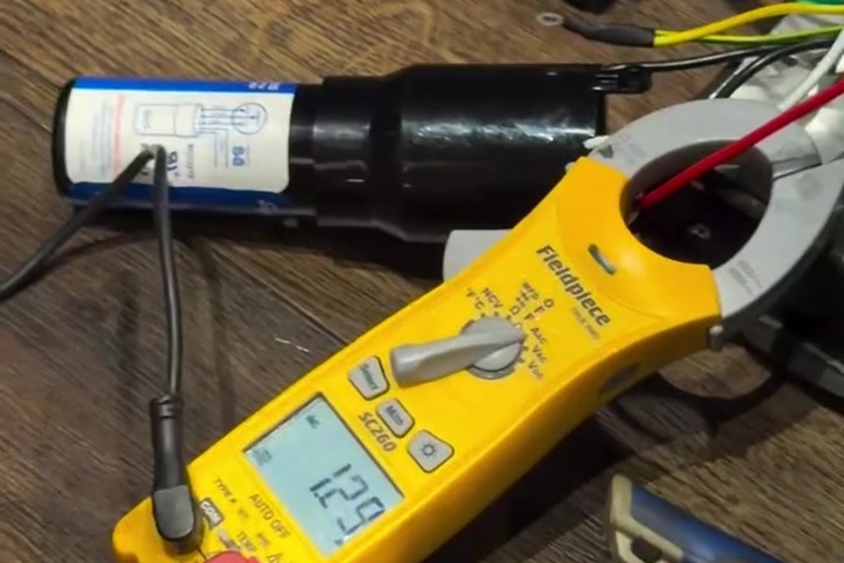
Step 3: a clamp meter and capacitor test replace guesswork with real readings.
Step 4: Check the Controller and Airflow
A digital temperature controller tells the cooler when to run, defrost and stop. If its sensor is off or its settings have drifted, the unit may not cool properly even when the refrigeration system is healthy. The technician checks the display reading, the set point and the fan operation so air moves across the evaporator and through the cabinet as designed.
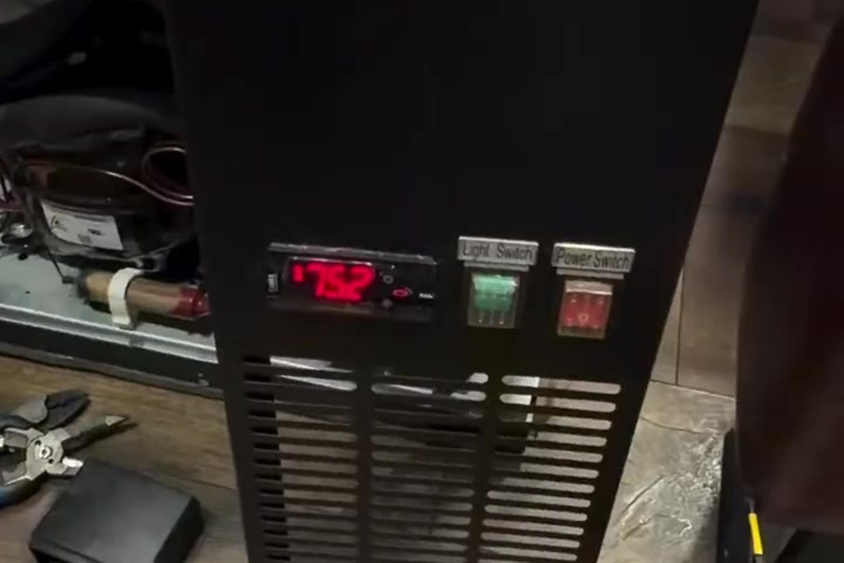
Step 4: the digital controller and fans are verified so air circulates properly.
Step 5: Repair, Restart and Verify
Once the faulty component is corrected, the cooler is restarted and monitored. A professional bar cooler repair is not finished when the compressor turns on. It is finished when temperatures are dropping, the fans are running, the controller reads correctly and the technician is confident the unit will hold temperature through a busy night. That is how a warm cooler becomes a fully cold one in a single visit.
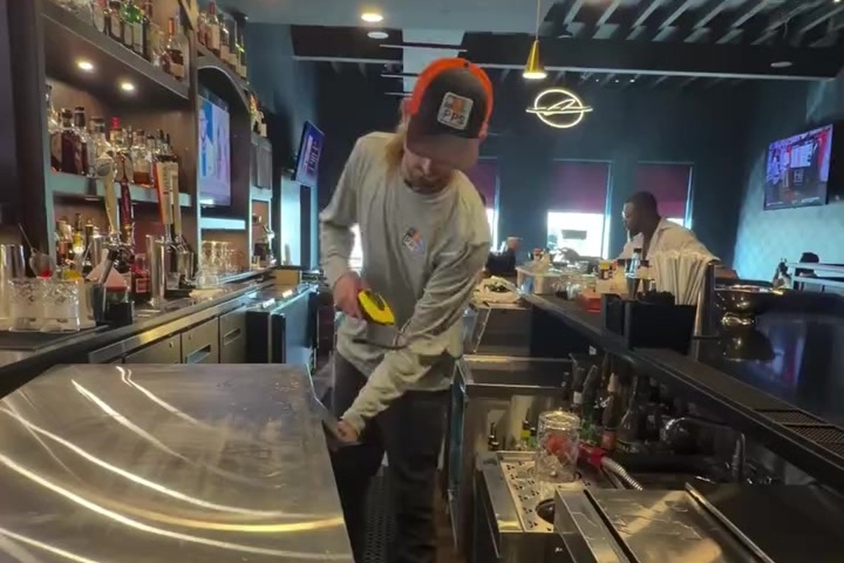
Step 5: final checks behind the bar before the cooler goes back into service.
What Is R290, and Why Does It Matter for Bar Cooler Repair?
R290 is propane, a natural hydrocarbon refrigerant that is increasingly used in new self-contained commercial refrigeration equipment such as back-bar coolers, reach-ins and display units. Manufacturers like it because it is energy efficient and has a very low global warming potential compared with many older refrigerants. In the United States, the EPA has approved R290 for certain self-contained commercial refrigeration uses with limited charge sizes.
Because propane is flammable, R290 equipment is built with small refrigerant charges and specific safety features. That has real consequences for service:
- Technicians should be trained in handling flammable refrigerants and should follow manufacturer procedures.
- Ignition sources must be controlled during any work on the sealed system.
- Using the wrong tools, recovery equipment or refrigerant can create safety risks and may void a warranty.
- Many problems, such as capacitors, wiring, fans, controllers and dirty coils, can be diagnosed without opening the sealed system, which is why a careful bar cooler repair starts there.
Common Bar Cooler Problems and What Causes Them
The table below summarizes the symptoms we see most often and what a technician checks first. It can help you describe the problem accurately when you call.
| Symptom | Likely Cause | What the Technician Checks |
| Warm drinks, compressor not starting | Weak start or run capacitor, relay, loose wiring | Electrical testing with a clamp meter and a connection inspection |
| Compressor runs constantly, weak cooling | Dirty condenser coil, failing condenser fan, high room heat | Coil cleaning, fan motor check, airflow around the unit |
| Cooler cycles on and off rapidly | Controller or sensor problem, overload | Controller settings, sensor position, amp draw |
| Ice or frost inside the cabinet | Defrost fault, leaking door gasket, evaporator fan | Gasket seal, defrost operation, fan operation |
The Real Cost of Waiting on a Bar Cooler Repair
Warm beer is only the visible loss. A failing cooler can also mean:
- Spoiled garnishes, dairy, juices and prepared foods.
- Longer wait times and frustrated guests during peak hours.
- Staff scrambling for ice and emergency storage.
- Higher energy bills while a struggling compressor runs longer.
- A bigger repair later, because heat and strain can damage the compressor.
A struggling cooler is giving you a warning. Calling for bar cooler repair at the first sign, such as longer run times, odd noises or drifting temperatures, often costs less than waiting for a total failure on a Saturday night.
| Is Your Bar Cooler Running Warm Right Now? Do not wait for the weekend rush. Reach out to Pappas Parts & Service for fast, professional bar cooler repair. Contact our team today and tell us the make, the symptoms and whether the unit uses R290. |
Repair or Replace? How to Decide
Not every failing cooler needs to be replaced. When you talk to a technician, consider these points:
- Age: units near the end of their expected life are more likely to need repeated repairs.
- Cost: if a repair approaches a large share of the price of a new unit, replacement may make sense.
- Parts availability: common electrical parts are usually quick to source, while discontinued models can cause delays.
- Repair history: a unit that fails again and again is costing you more than the invoices show.
- Warranty: a newer unit may still be covered, so check with the manufacturer or installer before paying out of pocket.
In the case shown in our video, a targeted bar cooler repair was the faster and more practical path.
Preventive Maintenance Checklist for Bar Coolers
Most breakdowns give warnings first. These habits keep a bar cooler repair call rare instead of routine:
- Clean the condenser coil regularly, and more often in dusty or greasy areas.
- Check door gaskets for tears and gaps, and make sure doors close fully.
- Keep a thermometer inside and log temperatures daily.
- Schedule professional service at least once or twice a year.
Bars rarely depend on just one cooler. If you also run a walk-in, our walk-in cooler repair team can keep bulk storage cold, and our ice machine repair service keeps the ice flowing for every drink you pour.
| See Us on Google Want directions, photos and customer feedback before you call? Find Pappas Parts & Service on Google Maps and see how local businesses rely on our team. |
Commercial Refrigeration Repair Across Northeast Florida
Pappas Parts & Service supports bars, restaurants, cafés and other food-service businesses throughout Northeast Florida. Our coverage includes Jacksonville, Jacksonville Beach, Orange Park, St. Augustine, Fernandina, Callahan, Middleburg, Hilliard, Baldwin, Bryceville, Kingsland and St. Marys. You can review every location on our service areas page.
Read about our team and browse real jobs in our project gallery.
Frequently Asked Questions About Bar Cooler Repair
How much does bar cooler repair cost?
The cost depends on the fault, the parts needed and the type of unit. Cleaning and electrical repairs such as capacitors or connections generally cost less than compressor or sealed-system work. A good technician diagnoses first and explains your options before starting.
How long does a bar cooler repair take?
Many repairs are finished in a single visit when the needed parts are on the truck. If a part must be ordered, you will get a clear plan on the first visit.
Is R290 safe to use in a bar?
Yes, when the equipment is installed and serviced according to the manufacturer’s instructions. R290 units use small refrigerant charges and are designed with safety in mind, but service should always be done by a trained technician.
Why is my bar cooler running but not cooling?
Common causes include a dirty condenser coil, a failed fan, a weak capacitor, a controller or sensor fault, or an issue in the sealed refrigeration system. A technician can test each one quickly.
What temperature should a bar cooler hold?
Food that needs refrigeration should stay at 41°F or below. Many bars keep coolers between roughly 36°F and 40°F so food stays safe and drinks stay cold.
Can I fix a bar cooler myself?
You can safely check that the unit has power, clean the exterior and keep vents clear. Electrical testing and sealed-system work, especially on R290 units, should be left to professionals.
Final Thoughts: Get Your Bar Cooler Back to Cold
A warm cooler does not have to ruin your night. As the video shows, a structured bar cooler repair that inspects wiring, tests electrical parts, checks controls and verifies the result can return a unit to full cooling in one visit. With R290 equipment becoming more common, choosing a team that understands both the technology and the pace of a working bar makes all the difference.
| Need Bar Cooler Repair? Call Pappas Parts & Service Do not let warm drinks cost you another night of sales. Get in touch with Pappas Parts & Service for dependable commercial refrigeration repair, and find us on Google Maps for directions and reviews. |
