
It is the call every business owner dreads. The dining room feels sticky, the office is warm, customers are fanning themselves with menus, and the thermostat insists the system is running. A commercial AC not cooling is far more than an annoyance. It hurts comfort, sales, and employee productivity, and during a Florida summer it can force you to close early.
Recently, our technicians at Pappas Parts & Service climbed onto a rooftop in Northeast Florida to inspect a Carrier package unit that could no longer keep up with the heat. We expected one problem. We found five. Every one was common, every one was preventable, and together they were choking the system until it could barely move air, let alone cool a building.
Below, we walk through each problem with real photos from the job, the warning signs to watch for, and when to call a professional.
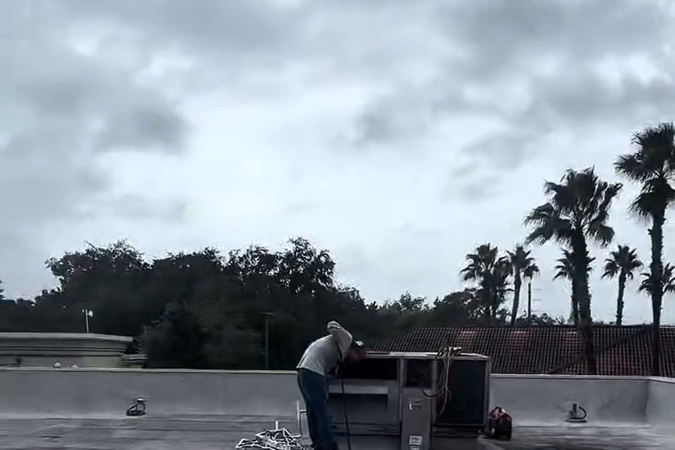
The rooftop package unit where we found five separate problems.
Key Takeaways
- Most cases of a commercial AC not cooling trace back to airflow, drainage, or power, not a failed compressor.
- Dirty filters and dirty coils are the most common causes and the easiest to prevent.
- A frozen evaporator coil is a symptom, so find out why it froze before restarting the unit.
- A broken blower belt can stop airflow completely even when the unit sounds like it is running.
- Scheduled maintenance costs far less than an emergency rooftop repair.
| Is your building too warm right now? Request a rooftop AC inspection and a Pappas Parts & Service technician will help you find the problem fast. |
Why Is a Commercial AC Not Cooling? Start With Airflow, Drainage, and Power
A commercial rooftop unit, often called a package unit, holds every major component in one cabinet: the compressor, condenser coil, evaporator coil, blower motor, and controls. Warm indoor air is pulled across the cold evaporator coil, which absorbs heat and moisture. The blower then pushes the cooled air through the ductwork into your space, and the heat is released outside.
Because everything depends on air moving freely across clean coils, a small restriction can snowball into a big failure. A dirty filter reduces airflow. Reduced airflow causes the evaporator coil to freeze. A frozen coil blocks even more air and sends water into a drain that may already be clogged. Meanwhile a stretched belt slips, and a worn electrical part trips the system off entirely. That chain reaction is exactly what we saw on this rooftop.
Problem 1: Clogged, Dirty Air Filters
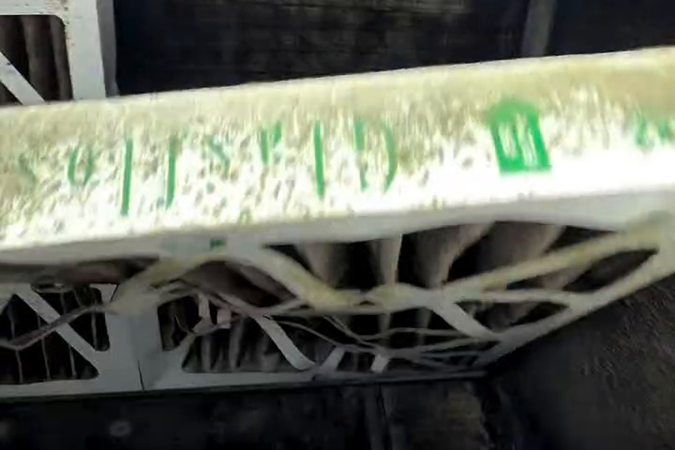
A badly clogged pleated filter pulled from the rooftop unit.
The first thing we pulled out of the cabinet was the air filter, and it was caked with dust, grease, and debris. Filters protect the coils and blower, but once they load up they act like a wall. The blower works harder, airflow drops, and cooling capacity falls with it.
Warning signs: weak airflow at the vents, rooms that never reach the set temperature, rising energy bills, and a unit that runs constantly. Restaurants and kitchens are especially vulnerable because airborne grease coats filters quickly.
What to do: check filters monthly and replace them as the manufacturer recommends, typically every one to three months in commercial buildings. Use the correct size and MERV rating, because an overly restrictive filter can cause the same airflow problems you are trying to avoid.
Problem 2: A Dirty, Frozen Evaporator Coil
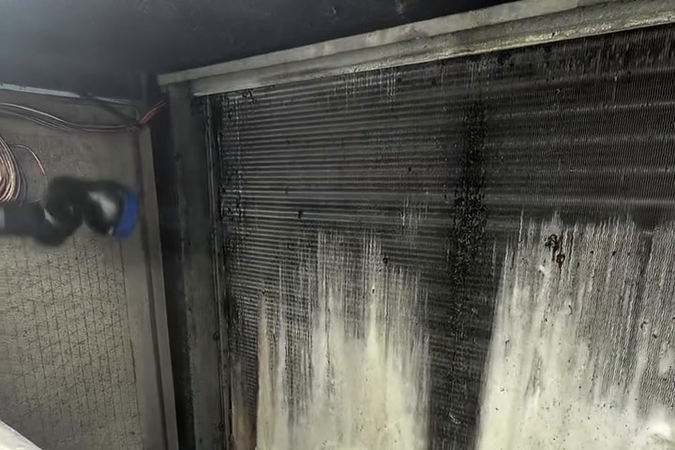
Heavy dirt and residue built up on the evaporator coil.
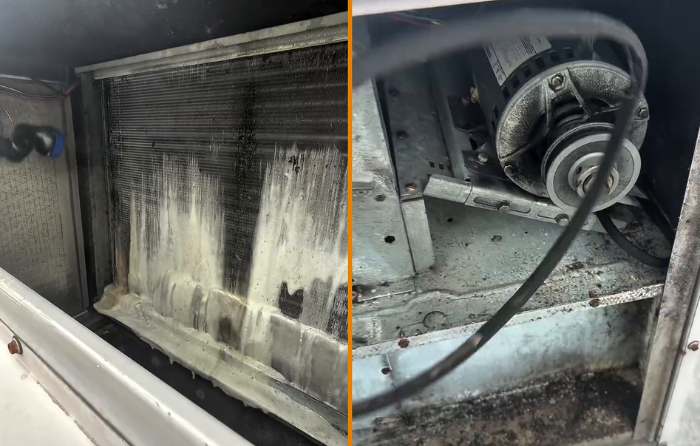
Behind the filter, the evaporator coil told the real story. Instead of clean aluminum fins, we found a thick layer of dirt, slime, and residue. A coil in this condition cannot absorb heat properly. When airflow is restricted or the coil is too dirty to transfer heat, its surface temperature drops below freezing and moisture turns to ice.
A frozen coil is one of the most frequent reasons for a commercial AC not cooling. You may see ice on the refrigerant lines, hear dripping water, or notice warm air at the supply vents. Many owners are tempted to chip the ice away. Please do not. You can damage the fins or tubing, and the ice will return if the cause is not fixed.
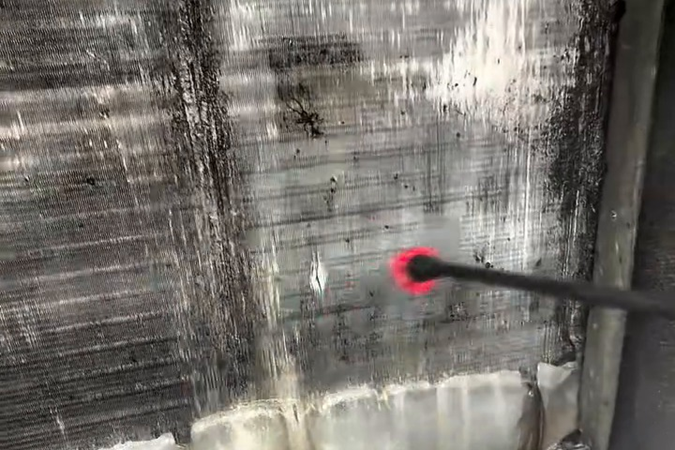
Our technician cleaning the coil with a sprayer and approved coil cleaner.
What to do: shut the system off, let the ice melt completely, and call a technician to find out why it froze. The cause might be a dirty filter, a failed blower, or low refrigerant. On this unit, we cleaned the coil with a sprayer and coil cleaner and rinsed it thoroughly. Professional coil cleaning restores heat transfer and takes strain off the compressor.
Problem 3: A Clogged Condensate Drain Line
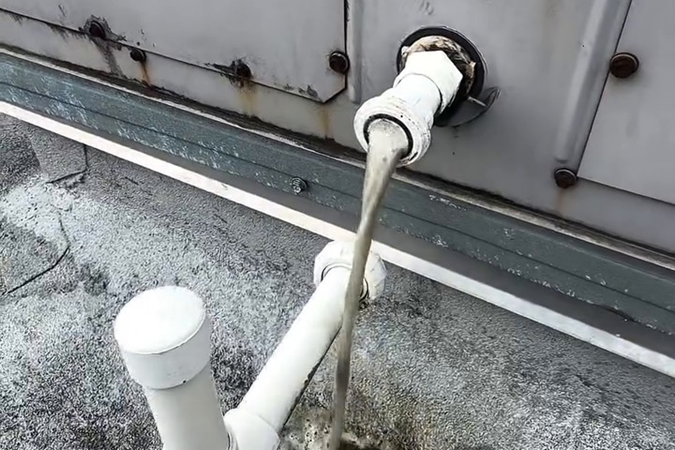
Dark, discolored water flowing from the condensate drain during cleaning.
As the coil pulls moisture out of Florida’s humid air, that water has to go somewhere. It drips into a drain pan and out through a condensate line. When we flushed this unit, the water that poured out was dark and full of sludge, proof that algae and debris had been building up for a long time.
A blocked drain can back water into the pan, overflow into the cabinet, trip a safety float switch that shuts the system down, or damage ceilings and roofing. It can also leave the coil sitting in standing water, which feeds even more slime growth.
Warning signs: water stains below the unit, musty smells, unexpected shutdowns, and standing water in the pan. What to do: have the drain pan and line cleaned and flushed at every maintenance visit. Some systems also benefit from treatments that slow algae growth.
Problem 4: A Worn or Broken Blower Belt
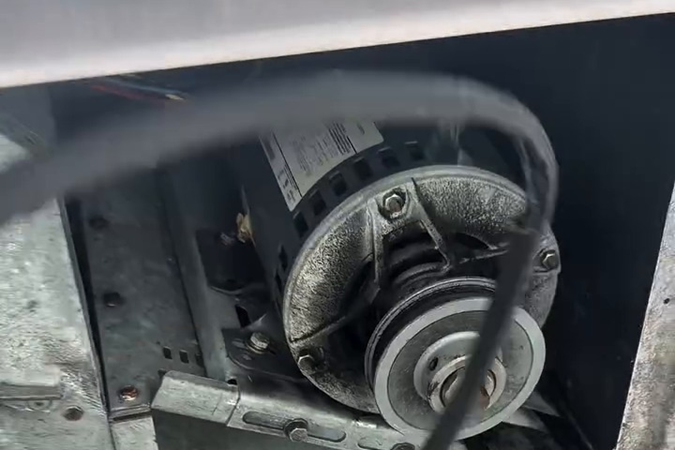
The blower motor and belt assembly inside the rooftop cabinet.
Many commercial units use a belt to turn the blower wheel. Over time that belt stretches, cracks, glazes, and eventually snaps. When it breaks, the motor may still hum, which fools people into thinking the system is working, but no air moves through the building. The evaporator coil then has nothing to carry heat away, and it freezes quickly.
Warning signs: a high-pitched squeal at startup, black rubber dust around the pulleys, weak or absent airflow, and visible cracks in the belt. What to do: have the belt checked for tension, wear, and pulley alignment at every service visit. Replacing a worn belt early is a small job. Waiting until it breaks on the hottest day of the year is not.
Problem 5: Electrical and Disconnect Issues
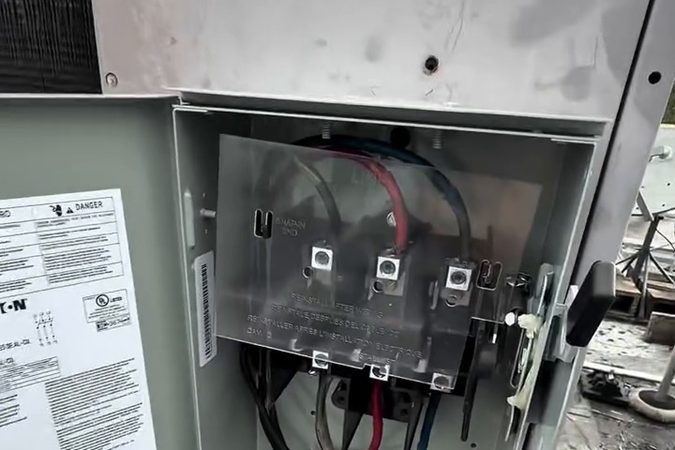
The rooftop electrical disconnect that supplies power to the unit.
The final check was electrical. Every rooftop unit has a disconnect that supplies power, and behind it sit contactors, capacitors, wiring, and controls. Heat, moisture, vibration, and age wear these parts down. A weak capacitor can keep a fan or compressor from starting. A pitted contactor can interrupt power altogether.
Warning signs: the unit will not start, it clicks without running, breakers trip repeatedly, or only part of the system runs. Safety note: electrical work on a rooftop unit should only be done by a licensed, trained technician. Never open a disconnect or touch wiring on a live unit.
| Seeing one of these warning signs? Schedule commercial HVAC repair with Pappas Parts & Service before a small issue becomes a full shutdown. |
Commercial AC Not Cooling? Quick Troubleshooting Table
| Symptom | Likely Cause | DIY Check or Call a Pro? |
| Weak airflow | Clogged filter | Check and replace the filter |
| Ice on lines or coil | Frozen evaporator coil | Turn off the unit and call a pro |
| Water around the unit | Clogged condensate drain | Call a pro to flush the line |
| Squealing or no air | Worn or broken belt | Call a pro |
| Unit will not start | Electrical failure | Check thermostat and breaker, then call a pro |
What You Can Safely Check Before Calling
- Confirm the thermostat is set to cool, below the current room temperature.
- Check that the breaker has not tripped. Reset it only once.
- Inspect the filter and replace it if it is dirty.
- Look for ice on visible refrigerant lines and, if you see any, turn the system off.
- Make sure vents and return grilles are not blocked by boxes or furniture.
If those checks do not solve it, stop and call. Repeated restarts on a frozen or broken system can turn a minor repair into a compressor replacement.
Repair or Replace? How to Decide
Sometimes a unit is simply at the end of its life. If your rooftop system is more than 12 to 15 years old, needs frequent repairs, or uses an older refrigerant being phased out, replacement may make more financial sense. Our team can walk you through the numbers and, when it makes sense, handle AC installation and replacement from sizing to startup.
Preventive Maintenance Keeps Your Commercial AC Running
Every problem on this rooftop was preventable. A consistent maintenance plan is the cheapest insurance a business can buy.
- Monthly: inspect and replace filters as needed, and keep the area around the unit clear.
- Quarterly: check belts, clean drain lines, and look for leaks or unusual noises.
- Twice a year: schedule professional coil cleaning and an electrical inspection before cooling season and again before winter.
Restaurants and grocery stores need the same discipline for refrigeration, because cooling equipment shares the same enemies: dirt, moisture, and neglect. If your kitchen needs help too, see our commercial refrigeration repair services.
Why Local Businesses Trust Pappas Parts & Service
Pappas Parts & Service is a locally focused commercial HVAC and refrigeration company serving Northeast Florida. Our technicians work on rooftop units, walk-in coolers, ice machines, and gas appliances, so we understand how a breakdown affects your day. You can learn more about our team and how we work.
From Jacksonville to the surrounding communities, we aim to find the real cause the first time instead of treating symptoms.
Commercial AC Not Cooling: Frequently Asked Questions
Why is my commercial AC running but not cooling?
Most often, airflow or heat transfer is restricted by dirty filters, a dirty or frozen evaporator coil, a broken blower belt, or a refrigerant problem. Electrical faults and clogged drains can also shut parts of the system down. A technician can pinpoint which one.
How often should commercial AC filters be changed?
Typically every one to three months, and more often in kitchens, dusty spaces, or heavy-use buildings. Check them monthly.
What causes a commercial AC coil to freeze?
Restricted airflow from a dirty filter or failed blower, a dirty coil, or low refrigerant. Turn the system off and let it thaw before calling for service.
Can a broken blower belt make a rooftop unit stop cooling?
Yes. When the belt breaks, the blower wheel stops, no air crosses the coil, and the building warms up even though the outdoor section may still be running.
How much does commercial AC repair cost?
It depends on the failed part, unit size, and rooftop access. Filters and belts are inexpensive, while compressors cost far more, which is why early repair saves money. A technician can give an estimate after inspection.
How often should a rooftop AC unit be serviced?
At least twice a year, before cooling season and before heating season, with more frequent visits for high-demand businesses.
Don’t Let a Commercial AC Not Cooling Problem Shut You Down
A commercial AC not cooling rarely comes down to one dramatic failure. More often it is a handful of small, ignored issues, like the clogged filter, dirty coil, blocked drain, tired belt, and worn electrical parts we found on this one rooftop unit. Catch them early and you protect your customers, your staff, and your equipment.
| Serving Jacksonville and surrounding Northeast Florida? Check our service areas and book your rooftop AC inspection with Pappas Parts & Service today. |
