
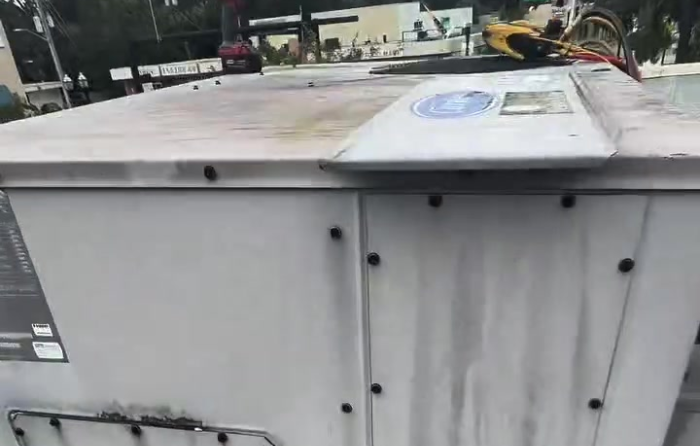
It is the hottest week of the year, your dining room or showroom is filling up, and the rooftop unit is blowing warm air. Few things hurt a business faster than a failed air conditioner. The good news is that most breakdowns trace back to a short list of causes, and a simple commercial AC troubleshooting routine can help you catch them early.
In this guide, Pappas Parts & Service explains three of the most common rooftop unit problems: a frozen coil, dirty filters, and a broken blower belt. You will learn the warning signs, the usual causes, what you can safely check yourself, and when to bring in a professional. The photos below come from a service video of a Carrier rooftop unit.
Why Commercial AC Troubleshooting Matters for Your Business
A residential air conditioner can fail on a weekend and the family simply opens a window. A commercial system does not give you that option. When cooling stops, customers leave, employees slow down, inventory can spoil, and sensitive equipment can overheat. A small airflow issue that you ignore for a week often turns into a compressor failure or a flooded ceiling.
Good commercial AC troubleshooting works from the simplest, cheapest checks to the more complex ones. That saves money and gives your technician a clear starting point.
How a Commercial Rooftop AC Unit Cools Your Space
Most small and mid-size businesses use packaged rooftop units. A rooftop unit is a single cabinet that holds the compressor, condenser coil, evaporator coil, blower, filters, and controls. Warm air from your building is pulled across the cold evaporator coil, where heat and moisture are removed. The blower then pushes the cooled air back through the ductwork.
That process only works when clean air moves freely, the coil is clean, and the blower spins at the right speed. When one fails, the others suffer, which is why these three problems often show up together.
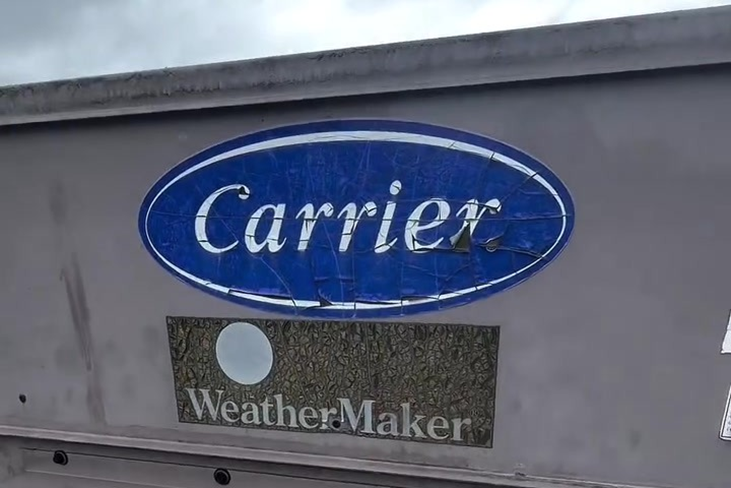
A Carrier rooftop unit like this one is common on restaurants, offices, and retail buildings.
Problem 1: A Frozen Evaporator Coil
A frozen coil is one of the most common reasons a commercial AC stops cooling. Ice builds up on the evaporator coil and blocks air from passing through. The unit keeps running, but very little cool air reaches the room.
Warning signs of a frozen coil
- Weak airflow from the supply vents, even though the fan is running
- Visible ice or frost on the refrigerant lines or the coil
- Water leaking or dripping around the unit or the ceiling
- Warm spots in the building and rising indoor humidity
- A unit that runs constantly but never reaches the set temperature
What causes a coil to freeze
A coil freezes when it gets too cold to shed the moisture it collects. The most frequent causes are:
- Restricted airflow: dirty filters, a failed blower, or a broken belt
- Low refrigerant: usually from a leak, which needs a certified technician
- A dirty evaporator coil: dust and grime act like a blanket and block heat transfer
- A clogged condensate drain: standing water can back up and add to the problem
- Running cooling in low outdoor temperatures: common on mild days when the system is oversized or poorly controlled
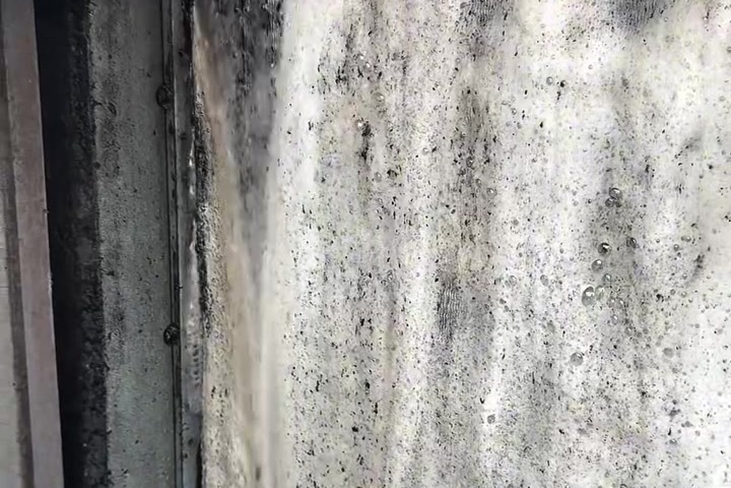
A coil covered in dirt and residue cannot absorb heat properly and is more likely to ice over.
What to do right now
- Turn the thermostat to OFF, then switch the fan to ON. Running only the fan helps melt the ice faster.
- Do not chip or scrape the ice. You can bend the fins or puncture a refrigerant line.
- Let the coil thaw fully. Depending on the amount of ice, this can take several hours.
- Check and replace the air filters while you wait.
- Look for water around the unit and make sure the condensate drain is flowing.
- Restart cooling only after the coil is completely clear of ice.
If the coil freezes again within a few days, the cause is not a one-time event. Repeat freezing usually points to low refrigerant, a failing blower, or a heavily soiled coil. These are the situations where a professional commercial HVAC repair visit is the safest and most cost-effective choice.
Problem 2: Dirty Air Filters
Dirty filters are the simplest problem on this list and also the most overlooked. Filters trap dust, lint, grease, and debris before they reach the coil. As they fill up, they choke the airflow. Less air crossing the evaporator coil means a colder coil, and a colder coil means ice.
How dirty filters hurt a commercial system
- Higher energy bills because the blower works harder to pull air through
- Longer run times and uneven temperatures across the building
- A higher risk of a frozen coil and compressor stress
- Poor indoor air quality, which affects customers and staff
How often should commercial AC filters be changed?
Most commercial buildings should inspect filters monthly and replace them every one to three months. Restaurants, salons, and buildings near construction often need changes sooner because grease, hair, and dust load a filter faster. Always use the filter size and rating recommended for your unit.
A quick test: hold the filter up to a light. If you cannot see light passing through, it is time to replace it. This single habit is one of the most effective steps in any commercial AC troubleshooting plan.
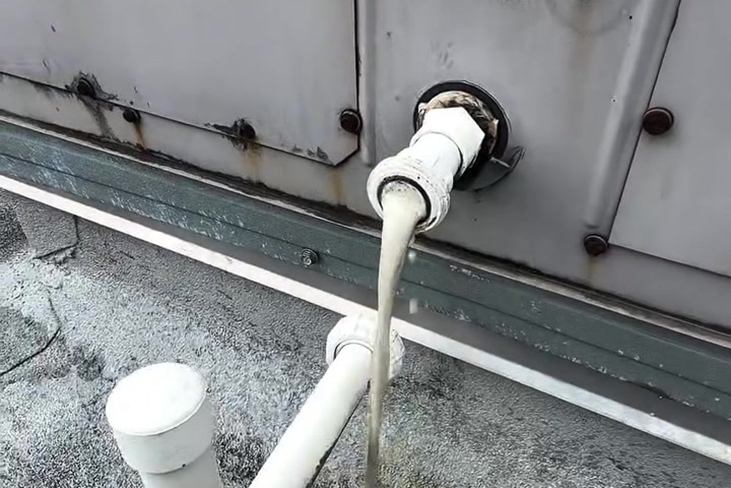
Dirty water from the condensate drain is a sign the coil and drain line need attention.
Problem 3: A Broken or Slipping Blower Belt
Many commercial rooftop units use a belt-driven blower. A motor turns a pulley, and a belt carries that motion to the blower wheel. When the belt cracks, stretches, or snaps, the motor may still hum, but the blower stops moving air. Without airflow, the coil freezes and the building warms up quickly.
Signs of a failing blower belt
- A loud squealing or chirping sound when the unit starts
- A burning rubber smell near the unit
- Little or no air at the vents while the motor is running
- Cracks, fraying, or a shiny glazed look on the belt
- Rubber dust or black residue around the pulleys
Why belts fail
Early belt failure usually has another cause. Misaligned pulleys, incorrect tension, worn sheaves, and a seized bearing all shorten belt life. If you swap in a new belt without finding the root cause, the next one may break just as fast.
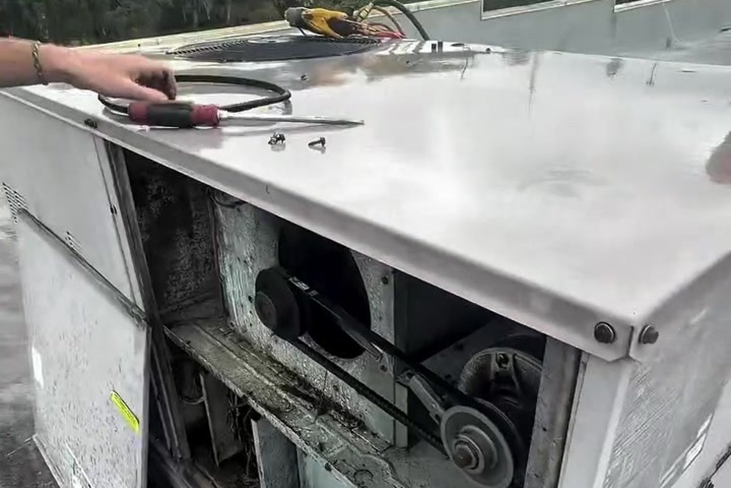
The blower compartment holds the motor, pulleys, and belt that move air through the system.
How a technician fixes a belt problem
- Disconnect and lock out the power before opening the blower compartment.
- Inspect the belt, pulleys, motor mount, and blower bearings for wear.
- Install the correct size and type of belt for the unit.
- Align the pulleys so the belt runs straight.
- Set the proper belt tension and confirm that the blower reaches the right speed.
- Check airflow, amp draw, and temperature drop before leaving the roof.
| Is Your Rooftop Unit Frozen, Clogged, or Not Blowing? Do not wait for a small airflow problem to become a full shutdown. Schedule commercial AC repair with the Pappas Parts & Service team today. View Our Services |
Commercial AC Troubleshooting Quick Reference
Use this table as a fast checklist when your system is not cooling. It covers the three problems above and the most common signs that go with them.
| Symptom | Likely Cause | First Check | Call a Pro? |
| Ice on coil or lines | Low airflow or low refrigerant | Filters, fan, drain | Yes, if ice returns |
| Weak airflow at vents | Dirty filters or dirty coil | Replace filters | Yes, if no change |
| Squealing or burning smell | Worn or slipping belt | Visual belt check (power off) | Yes |
| Motor runs, no air | Broken belt | Look for a loose or snapped belt | Yes |
| Water leaking inside | Clogged condensate drain | Drain flow at the unit | Yes, if clog returns |
| Unit never reaches set temperature | Airflow or refrigerant issue | Filters and thermostat | Yes |
Safety First: What Not to Do
Rooftop units involve high voltage, rotating parts, and pressurized refrigerant. Always treat the power as live until it is locked out. Never work on a roof alone.
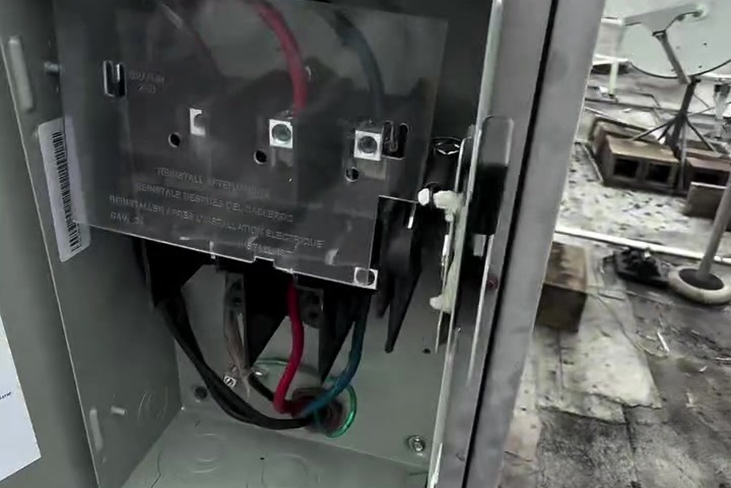
Always shut off and lock out the electrical disconnect before opening any panel.
- Never open panels with the power on
- Never chip ice off a coil
- Never add refrigerant yourself. In the United States, handling refrigerant requires EPA certification
- Never run a unit with a broken belt or a frozen coil for long periods
Preventive Maintenance Checklist for Commercial AC
The best form of commercial AC troubleshooting is the kind you never need to do. A simple maintenance schedule prevents most of the failures described above.
- Monthly: inspect and replace filters, check thermostat settings, look for water around the unit
- Quarterly: flush the condensate drain, inspect the belt for cracks, listen for unusual noise
- Twice a year: clean the evaporator and condenser coils, check refrigerant levels, test electrical connections and capacitors
- Yearly: inspect pulleys, bearings, and motor mounts, and measure airflow and temperature split
Schedule a full tune-up in spring, before the heavy cooling season begins.
When to Call a Professional
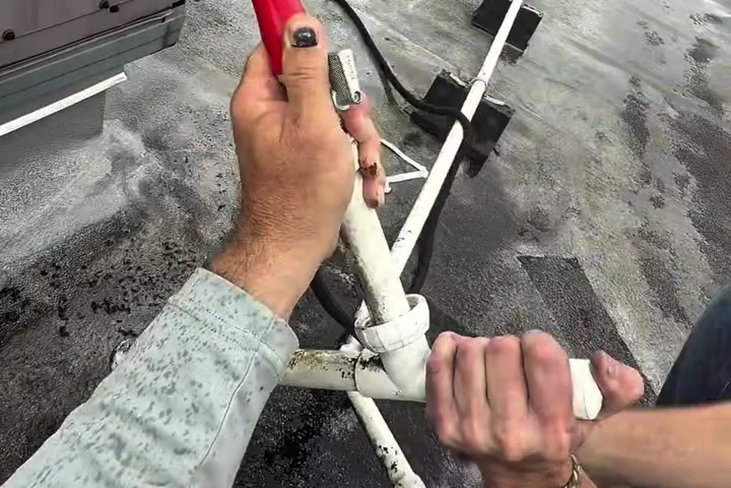
Flushing and clearing the condensate drain is a routine part of professional rooftop service.
Basic filter changes and visual checks are reasonable for most facility managers. Everything beyond that is better left to a trained technician. Call for service if:
- The coil freezes more than once
- You see a snapped, frayed, or smoking belt
- You suspect a refrigerant leak or hear hissing
- Water keeps leaking after you clear the drain
- Your unit is more than 10 to 15 years old and repairs are becoming frequent
If repair bills keep climbing, a newer, more efficient system may be the smarter investment. A technician can walk you through repair versus AC installation and replacement so you can compare costs and make a confident decision.
Commercial AC and Refrigeration Service in Jacksonville, FL
Pappas Parts & Service helps businesses keep their cooling systems working, from rooftop units to walk-in coolers. Our goal is to find the real cause of the problem and fix it properly.
We provide service in Jacksonville and throughout the surrounding region. You can see the full list of towns on our service areas page. Because airflow, coils, and drains matter just as much in cold storage, we also support restaurants and grocers with commercial refrigeration repair.
Frequently Asked Questions About Commercial AC Troubleshooting
Why is my commercial AC running but not cooling?
The most common reasons are dirty filters, a frozen evaporator coil, a broken blower belt, or low refrigerant. Start by checking the filters and looking for ice. If those look normal, a technician should check the belt, blower, and refrigerant charge.
Can dirty filters really freeze an AC coil?
Yes. Dirty filters restrict airflow across the evaporator coil. The coil gets too cold, moisture on the surface freezes, and ice builds up until air can barely pass through.
How do I know if my blower belt is broken?
If the motor is running but little or no air comes from the vents, the belt may be broken or slipping. A squealing sound, a burning rubber smell, or visible cracks are other common signs.
How much does commercial AC repair cost?
Cost varies by the part, the unit size, and the labor involved. Acting early on a belt or filter problem usually costs far less than repairing a damaged compressor. A technician can quote accurately after inspecting the unit.
Final Thoughts
A frozen coil, dirty filters, and a broken belt are connected by one thing: airflow. Keep the air moving, keep the coil clean, and fix small issues early. With regular maintenance and a clear approach to commercial AC troubleshooting, you can avoid most emergency shutdowns.
| Need Commercial AC Help? Talk to Pappas Parts & Service If your system is freezing up, losing airflow, or making strange noises, our team is ready to diagnose it and get you back to normal. Contact Us Today |
