
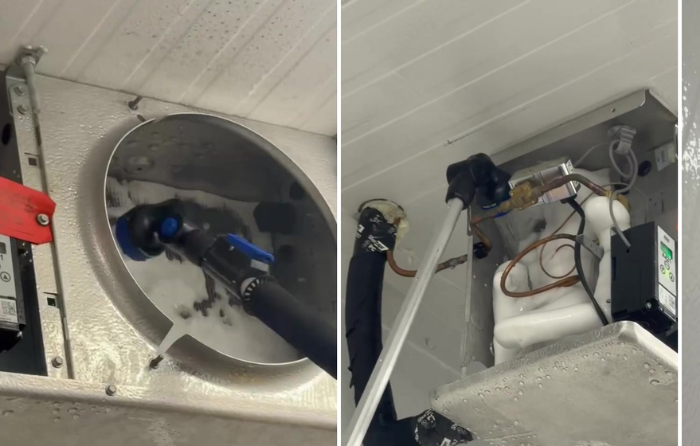
A walk-in cooler runs around the clock, and the evaporator coil inside it does most of the heavy lifting. When that coil is coated in dust, grease and frost, the whole refrigeration system works harder, energy bills climb and your food is put at risk. The good news is that learning how to clean a walk-in cooler evaporator coil is one of the most valuable maintenance skills a restaurant, grocery store or commercial kitchen can build.
At Pappas Parts & Service, our technicians clean evaporator coils in walk-in coolers and freezers every week. In this guide we walk you through the full process, shown in photos from a real service call, so you know what a proper cleaning looks like, how often it should happen and when it is smarter to bring in a professional.
What Does a Walk-In Cooler Evaporator Coil Do?
The evaporator coil is the part of your walk-in cooler that actually removes heat. Cold refrigerant flows through the coil while a fan pulls warm air from the box across the fins. The coil absorbs that heat, and cold air is pushed back into the room to keep your products at a safe temperature.
Because the coil sits in the airflow all day, it collects everything the fan pulls through it: dust, cardboard fibers, kitchen grease, mold spores and moisture. Even a thin layer of buildup insulates the fins, so the compressor runs longer, which means higher electric bills, more frost and more wear on expensive parts.
Signs Your Walk-In Cooler Evaporator Coil Needs Cleaning
Watch for these signs:
- The box struggles to hold temperature, especially during busy service hours or hot Florida afternoons.
- Ice or frost builds up on the coil, fan housing or refrigerant lines.
- Water drips or puddles under the unit because the drain pan or drain line is clogged.
- Dust, grease or a fuzzy gray layer is visible on the fins.
- The compressor runs almost constantly, or your energy bill rises with no change in usage.
- Musty or sour odors come from the evaporator area.
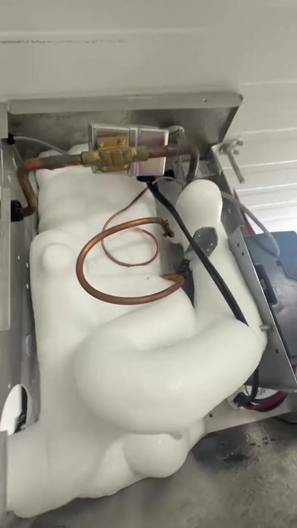
Keep in mind that ice does not always mean a dirty coil. It can also point to a failed defrost heater, a faulty defrost timer, a door gasket that leaks warm air or a refrigerant problem. If frost returns soon after a cleaning, it is time for a professional diagnosis.
Safety First: What to Do Before You Start
Coil cleaning is simple, but you are working with electricity, water and moving fan blades. Before you begin:
- Turn off power at the evaporator disconnect and the breaker, and use lockout/tagout so nobody switches it back on.
- Move or cover food and shelving near the unit, or temporarily relocate product to another cooler.
- Wear safety glasses, gloves and non-slip shoes. Wet floors in a cold room get slippery fast.
- Cover electrical controls, sensors and the thermostat with plastic sheeting and tape.
- Never use a pressure washer, wire brush or sharp tool on the fins. Bent fins block airflow and are hard to fix.
- Never handle refrigerant unless you hold the proper EPA certification.
What you will need: a foaming or no-rinse evaporator coil cleaner rated for food-service use, a soft brush or fin comb, a shop vacuum, a low-pressure sprayer or hose with an extension wand, plastic sheeting, clean rags, a bucket, a flashlight and a step ladder.
How to Clean a Walk-In Cooler Evaporator Coil: Step by Step
Here is the exact process our technicians follow. If you want to know how to clean a walk-in cooler evaporator coil the right way, follow these eight steps in order.
Step 1: Shut Off Power and Prep the Area
Switch off the evaporator fans and defrost circuit, lock out the power and protect nearby electrical parts with plastic. Clear the floor below the unit and lay down towels or a drain mat so water is easy to manage.
Step 2: Remove Loose Debris
Use a shop vacuum with a soft brush attachment to lift dust and lint from the fin surface. Wipe down the fan housing, fan guard and blades. Always brush in the direction of the fins, never across them.
Step 3: Apply Foaming Coil Cleaner
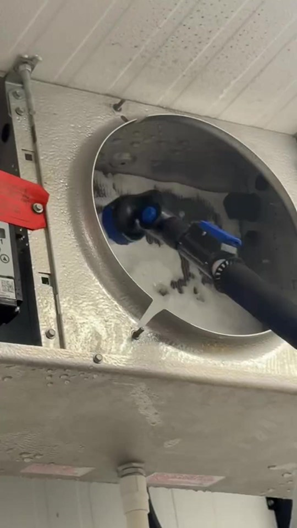
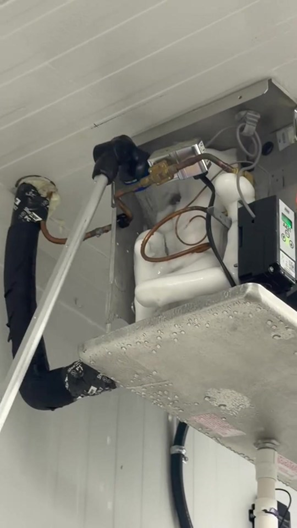
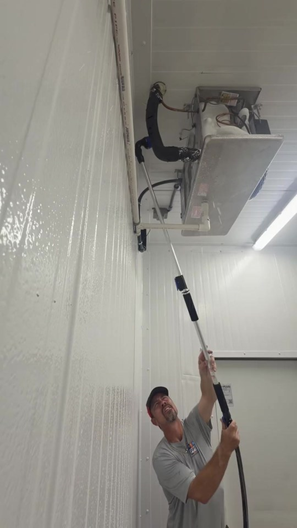
Spray the cleaner evenly across the entire coil, working from top to bottom. The foam clings to the fins, loosens grease and dirt, and reaches deep into the coil where a brush cannot. An extension wand makes it easy to reach units mounted high on the ceiling.
Step 4: Let the Cleaner Soak
Give the cleaner the time listed on the label, usually five to ten minutes. This dwell time allows the foam to break down grease and buildup. Do not let the product dry on the fins.
Step 5: Rinse With Low-Pressure Water
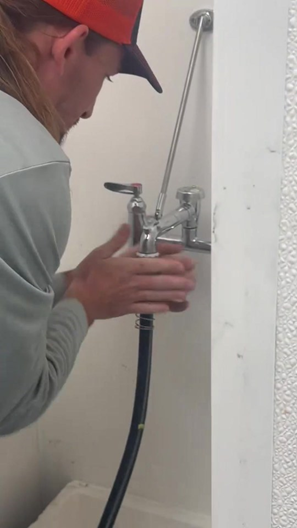
Connect your hose to a utility faucet and rinse the coil from top to bottom, following the direction of the fins, until the runoff is clear. Keep the pressure gentle. Water should flow into the drain pan and out through the drain line, so confirm it drains freely as you go.
Step 6: Clean the Drain Pan and Drain Line
A dirty drain pan grows slime and mold, and a clogged line sends water back into the cooler or onto the floor. Remove standing water, scrub the pan with a mild sanitizing solution and flush the drain line until water moves through without backing up.
Step 7: Inspect Fins, Fan Blades and Motors
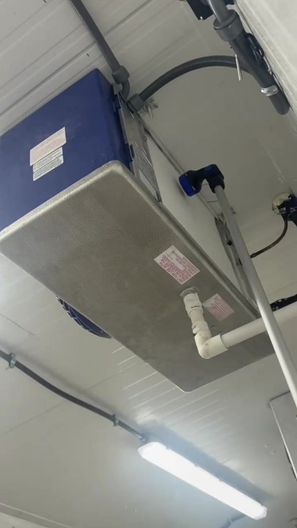
With the coil clean, use a flashlight to look for bent fins and straighten them gently with a fin comb. Check that the fan blades spin freely, that the motors are not noisy and that there is no oily residue on the tubing, which can signal a refrigerant leak.
Step 8: Restore Power and Verify Performance
Remove the plastic covers, dry the floor, then restore power. Confirm the fans start, run a defrost cycle if your controller allows it and watch the box temperature. A walk-in cooler should return to roughly 35 to 38°F, and product must stay at or below 41°F for food safety.
| Need a hand with your walk-in cooler? Skip the mess and the guesswork. Contact our team today to schedule professional evaporator coil cleaning and get your cooler running clean, cold and efficient. |
How Often Should You Clean a Walk-In Cooler Evaporator Coil?
The right schedule depends on your environment. As a general rule, clean the coil at least twice a year and inspect it monthly. Humid climates like Northeast Florida encourage mold and slime in drain pans, so more frequent checks pay off.
| Cooler Environment | Recommended Cleaning |
| Clean, low-dust storage with sealed products | Every 6 months |
| Typical restaurant or grocery walk-in | Every 3 months |
| Kitchens with grease, flour or heavy dust | Every 1 to 3 months |
| Coolers near fryers, bakeries or loading docks | Inspect monthly, clean as needed |
Common Mistakes to Avoid When Cleaning Evaporator Coils
- Using a pressure washer or wire brush that flattens or bends the fins.
- Skipping the power shutoff and lockout step.
- Using harsh acid-based cleaners that are not rated for evaporator coils and can corrode aluminum and copper.
- Forgetting the drain pan and drain line, so the problem returns within weeks.
- Ignoring recurring ice instead of finding the root cause.
DIY Cleaning or Professional Service?
Trained staff can handle light, routine cleaning when the unit is accessible and in good condition. Call a professional when you see heavy ice, bent or corroded fins, oily residue on the tubing, noisy fan motors, repeated drain clogs or product temperatures above 41°F.
Our team provides walk-in cooler repair for failed fans, defrost problems and temperature swings. Because the evaporator is only one part of the system, we also handle complete commercial refrigeration repair, including compressors, condensers, controls and refrigerant circuits, along with commercial food service equipment repair for the rest of your kitchen.
If a coil is corroded beyond saving or you are building out a new space, we can also take care of walk-in refrigeration installation. You can browse everything we offer on our services page.
Why Choose Pappas Parts & Service for Coil Cleaning?
When your walk-in cooler is down, every hour costs you product and sales. That is why local restaurants and food service businesses trust Pappas Parts & Service:
- Licensed, trained HVAC/R technicians who work on walk-in coolers and freezers every day.
- Hands-on experience with restaurants, grocery stores, cafeterias and commercial kitchens.
- A local team that understands how Florida heat and humidity affect commercial refrigeration.
| Serving Jacksonville and nearby communities From Jacksonville and St. Augustine to Orange Park and Fernandina, we bring professional coil cleaning to your door. See the areas we serve and book your service today. |
Key Takeaways
- Knowing how to clean a walk-in cooler evaporator coil protects your food, your equipment and your energy budget.
- Always shut off and lock out power first, and never use a pressure washer on the fins.
- Use a foaming coil cleaner, let it soak, then rinse gently and clear the drain pan and line.
- Clean at least twice a year, and every three months in busy or greasy kitchens.
Frequently Asked Questions About Cleaning Walk-In Cooler Evaporator Coils
How do you clean a walk-in cooler evaporator coil?
Turn off and lock out the power, vacuum loose debris, apply a foaming evaporator coil cleaner, let it soak for the time listed on the label, rinse with low-pressure water, clean the drain pan and drain line, then restore power and check the temperature.
How often should a walk-in cooler evaporator coil be cleaned?
At least twice a year for most coolers. Restaurants and grocery stores often need it every three months, and greasy or dusty kitchens may need it every one to three months.
What is the best cleaner for a walk-in cooler evaporator coil?
Use a foaming or no-rinse cleaner made for evaporator coils and approved for food-service areas. Avoid harsh acid-based products that can corrode aluminum fins and copper tubing, and always follow the label.
Can I use a pressure washer on an evaporator coil?
No. High pressure bends the thin aluminum fins, restricts airflow and can force water into electrical parts. Use low-pressure water and a fin comb to straighten any bent fins.
Why is there ice on my walk-in cooler evaporator coil?
Ice can come from a dirty coil, a failed defrost heater or timer, a leaking door gasket or a refrigerant issue. If frost returns after cleaning, have a technician diagnose the cause.
How much does walk-in cooler coil cleaning cost?
Cost depends on the size of the unit, access and the condition of the coil. Contact Pappas Parts & Service for a quote based on your equipment.
Final Thoughts
A clean coil means a colder cooler, lower energy bills and fewer emergency calls. Now that you know how to clean a walk-in cooler evaporator coil, you can add it to your regular maintenance routine and catch small problems before they turn into spoiled product and costly repairs.
If you would rather leave it to the experts, Pappas Parts & Service is ready to help. Our technicians clean, inspect and repair walk-in coolers and freezers across the Jacksonville area.
| Ready for a cleaner, colder walk-in? Find Pappas Parts & Service on Google Maps to get directions, read customer reviews and reach our team directly. |
