
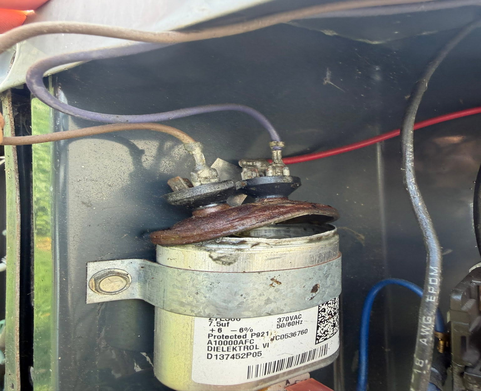
For a busy restaurant, a broken oven isn’t just an inconvenience — it’s a direct hit to revenue, service quality, and your team’s sanity during a dinner rush.
When a Mexican restaurant in Jacksonville, FL called Pappas Parts & Service, their gas convection oven had stopped heating as it should. The burner wasn’t igniting reliably, food was taking much longer to cook, and the kitchen team was working around a piece of equipment that had become more of a liability than an asset.
A failed hot surface igniter — one of the most common failure points in commercial gas convection ovens, and one that many restaurant owners don’t know to watch for until something goes wrong.
In this post, we’ll walk through exactly what happened, what a hot surface igniter is and why it fails, how we replaced it, and what every Jacksonville-area restaurant owner should know about keeping their commercial cooking equipment running reliably.
What Is a Hot Surface Igniter, and What Does It Do?
A hot surface igniter (HSI) is a component made from a highly resistive material — typically silicon carbide or silicon nitride — that heats up to extremely high temperatures when electricity passes through it. In a gas convection oven, the hot surface igniter serves two functions:
- It glows hot enough to ignite the gas when the oven calls for heat
- It acts as a safety sensor — when current flowing through the igniter reaches a certain threshold, it signals the gas valve to open
This is why a failing igniter doesn’t just affect ignition — it can cause the gas valve to never open at all, even when the oven appears to be trying to start. The oven may click, attempt to cycle, and then shut off without ever lighting. From the operator’s perspective, the oven simply doesn’t heat.
The Most Common Signs of a Failing Hot Surface Igniter
Hot surface igniters don’t usually fail all at once. They degrade gradually, which means there’s often a window where you can catch the problem before it becomes a complete shutdown. Here are the warning signs:
1. The Oven Takes Much Longer Than Usual to Reach Temperature
As an igniter ages and its resistance increases, it still glows — but not hot enough to reliably ignite gas on the first try. The oven may eventually light after several attempts, but preheat times stretch from 10 minutes to 20 or 30. This is a classic early warning sign.
2. The Oven Lights Sometimes But Not Others
Intermittent ignition is a telltale sign of an igniter that’s partially failing. The igniter may work fine when the oven is cold, but once it’s been in use and the internal temperature rises, the ceramic element expands and cracks become more pronounced — leading to inconsistent performance.
3. The Oven Tries to Ignite But Never Lights
This is where most restaurant owners notice the problem and call for service. The oven cycles, the igniter may glow dimly (or appear not to glow at all), and then the system shuts off on safety without igniting the burner. At this stage, the igniter has typically failed completely.
4. You Can See Cracks in the Igniter Element
If you (or your service technician) can see the igniter element, a cracked or broken ceramic body is a definitive sign of failure. Even if the oven is still lighting intermittently, a cracked igniter should be replaced immediately — a failed igniter during service is far more disruptive than a planned replacement.
Why Hot Surface Igniters Fail (And How to Extend Their Life)
Hot surface igniters are designed to handle extreme heat cycling — heating to 1,800–2,500°F and cooling back down with every ignition cycle. Over time, this thermal stress causes the ceramic material to degrade. Most igniters in a high-use commercial kitchen will last 3 to 7 years depending on usage intensity.
Several factors can shorten igniter life:
- Grease contamination: Grease that contacts the igniter during cooking can cause uneven heating and thermal shock
- Voltage fluctuations: Inconsistent electrical supply can cause the igniter to cycle improperly
- Frequent short cycles: Repeatedly opening the oven door causes additional ignition cycles and thermal stress
- Incorrect replacement parts: Using a non-OEM igniter with the wrong resistance rating can cause premature failure
- Delayed maintenance: Running the oven with a partially failing igniter stresses the gas valve and other components
Keeping your oven’s interior clean — especially around the burner and igniter area — and scheduling regular preventive maintenance can significantly extend igniter life.
| Pro Tip from Pappas Parts & Service: If your gas oven starts taking longer than usual to preheat, don’t wait until it stops working entirely. A service call for a planned igniter replacement costs a fraction of an emergency call during dinner service — and keeps your kitchen running without interruption. |
How We Diagnosed and Repaired the Jacksonville Restaurant’s Convection Oven
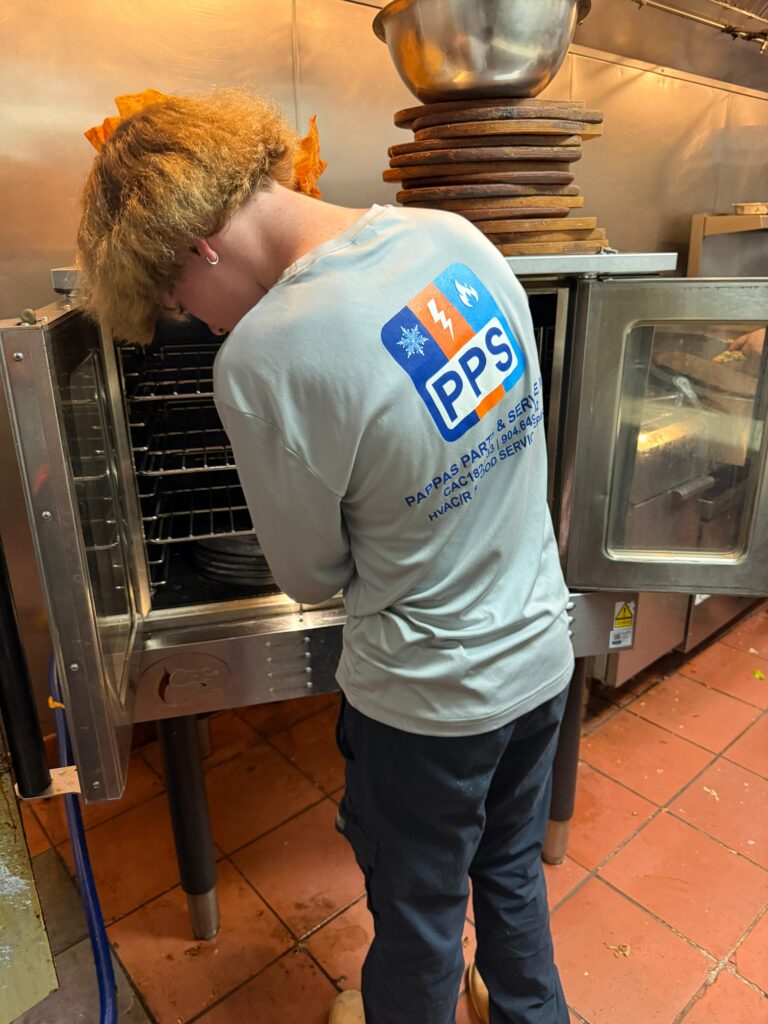
When we arrived at the Mexican restaurant in Jacksonville, the kitchen team described the problem clearly: the oven was attempting to ignite but not lighting, then shutting off. Food was being finished in other equipment, but kitchen efficiency had dropped significantly.
Here’s how our technician worked through the repair:
Step 1: Initial Diagnosis
Our first step was to observe the oven’s ignition attempt. Watching a cycle attempt tells us a lot about where the problem lies. In this case, we could see the igniter was glowing very dimly — not the bright orange glow of a healthy igniter — and the gas valve was not opening as a result. Classic igniter failure pattern.
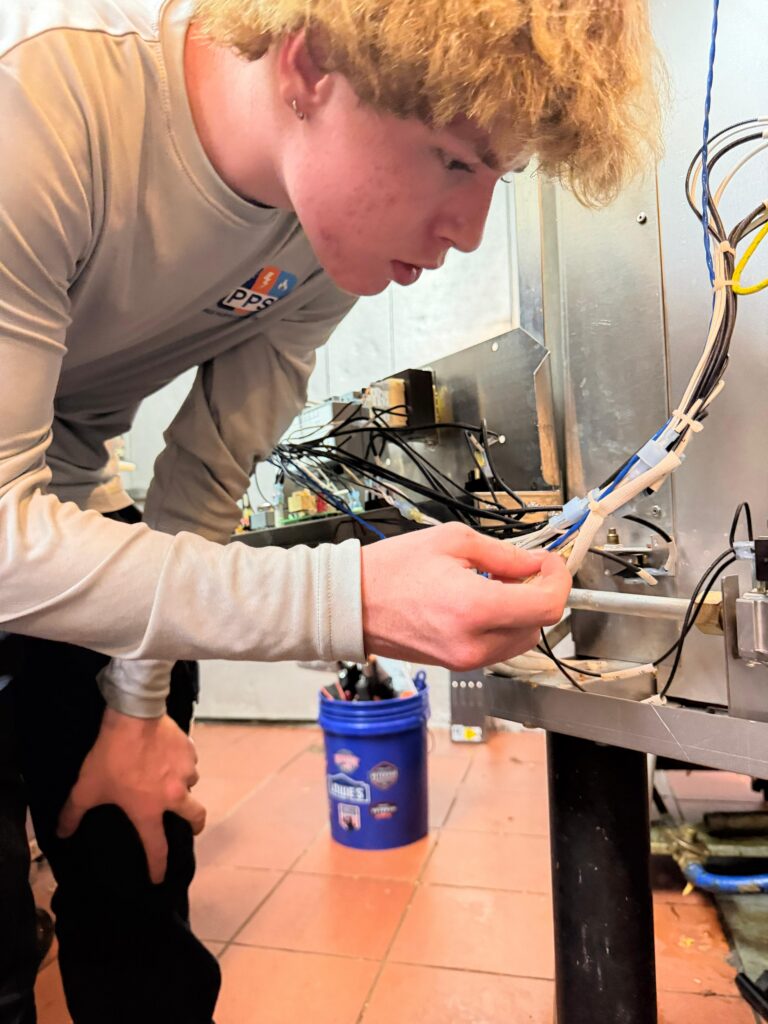
Step 2: Electrical Testing
We measured the igniter’s resistance using a multimeter. A healthy silicon carbide igniter typically reads between 40 and 200 ohms, depending on temperature. This igniter was reading out of spec — confirming electrical failure of the element, not a gas valve or control board issue.
Step 3: Part Identification and Sourcing
We identified the exact OEM-equivalent replacement igniter for this specific oven model. Using the correct part matters — an igniter with the wrong amperage draw won’t open the gas valve properly even if it glows correctly.
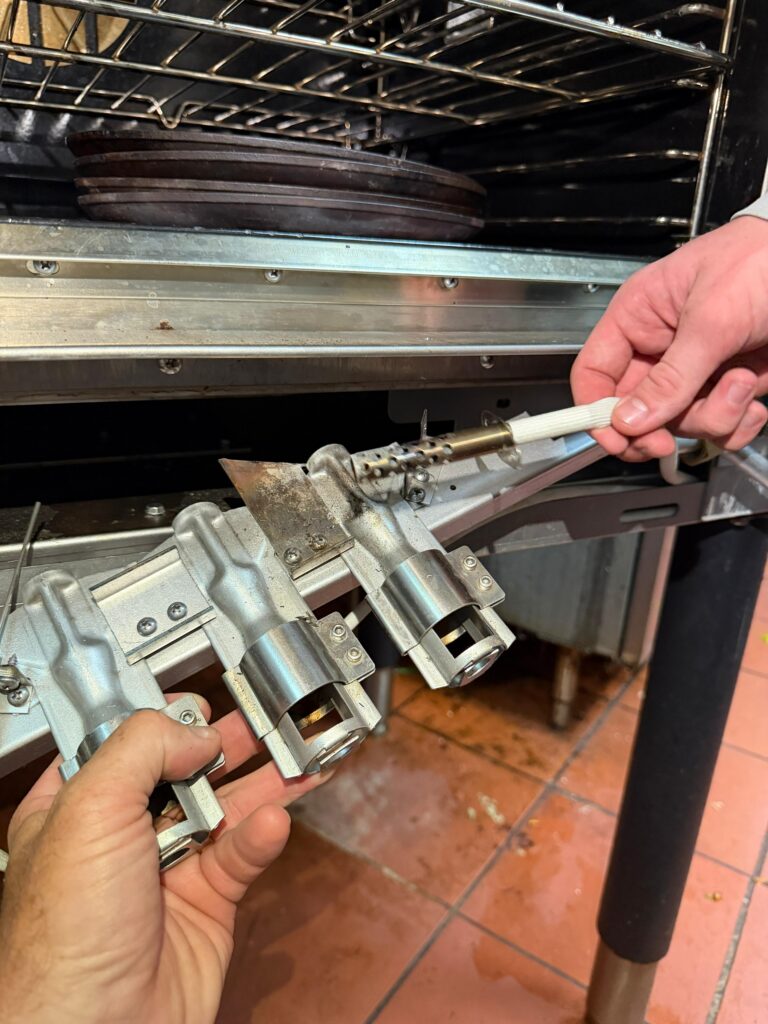
Step 4: Safe Removal and Replacement
With the oven shut off and gas supply verified closed, we carefully removed the failed igniter assembly. Hot surface igniters are fragile — even small amounts of skin oil from bare hands can cause premature failure of a new igniter, so we handled the new part with gloves throughout the installation.
Step 5: Functional Test and Verification
After installation, we restored the gas supply, powered up the oven, and observed a full ignition cycle. The new igniter glowed bright orange within seconds, the gas valve opened, and the burner lit cleanly on the first attempt. We ran several additional test cycles and confirmed consistent, reliable ignition before releasing the equipment back to the kitchen team.
Gas Convection Ovens: What Every Restaurant Owner Should Know
Gas convection ovens are workhorses of the commercial kitchen — they combine the efficiency of gas heat with a fan-circulated air system that cooks food faster and more evenly than standard ovens. But like any commercial equipment, they require regular maintenance and prompt repair when problems arise.
Common Gas Convection Oven Repairs We Handle
- Hot surface igniter replacement (most common failure)
- Gas valve replacement or adjustment
- Convection fan motor repair or replacement
- Thermostat and temperature sensor replacement
- Door gasket and hinge repair
- Burner orifice cleaning and adjustment
- Control board diagnosis and replacement
- Safety thermostat reset and testing
When to Call for Service vs. When to Replace
As a general rule, commercial cooking equipment that’s less than 10 years old is almost always worth repairing. If your oven is older and experiencing multiple simultaneous failures — igniter, gas valve, and control board, for example — a replacement conversation may make more financial sense.
Our technicians will always give you an honest assessment. We don’t recommend replacements to generate equipment sales — we’re a service company, and our business is built on long-term customer relationships with local Jacksonville restaurants and commercial kitchens.
Why Jacksonville Restaurants Trust Pappas Parts & Service
We’ve been serving commercial kitchens across Northeast Florida for over a decade. When a restaurant’s equipment goes down, every minute matters — which is why we offer 24/7 emergency service and carry common replacement parts on our service vehicles.
Our commercial cooking equipment team brings:
- Factory-trained technicians with hands-on experience across all major brands
- Digital diagnostic tools for accurate, first-visit diagnosis
- Access to OEM and OEM-equivalent parts for fast turnaround
- EPA 608 certification and full Florida licensing (#CAC1824133)
- Transparent, upfront pricing — no surprise charges after the job
We service Mexican restaurants, pizza operations, burger concepts, seafood houses, hotel kitchens, school cafeterias, and everything in between. If it uses gas and cooks food, we can fix it.
Our Commercial Kitchen & Gas Appliance Services
Gas Appliance Repair — Ovens, ranges, fryers, broilers, and more
Gas Appliance Installation — Safe, code-compliant installation of new commercial cooking equipment
Commercial Refrigeration Repair — Walk-ins, reach-ins, display cases, and prep table refrigeration
Walk-In Cooler Repair — Emergency and scheduled walk-in cooler service
Ice Machine Repair — Full-service ice machine diagnostics, cleaning, and repair
Commercial HVAC Repair — Keep your dining room and kitchen comfortable for staff and guests
Is Your Commercial Kitchen Equipment Working as It Should?
Pappas Parts & Service provides 24/7 emergency commercial cooking equipment repair across Jacksonville and Northeast Florida. Our factory-trained technicians quickly diagnose and repair ovens, fryers, grills, ranges, steamers, and more—helping your business minimize downtime and keep your kitchen running efficiently.
Licensed #CAC1824133 | Gas Appliance Repair & Installation | 24/7 Emergency Service Available
