
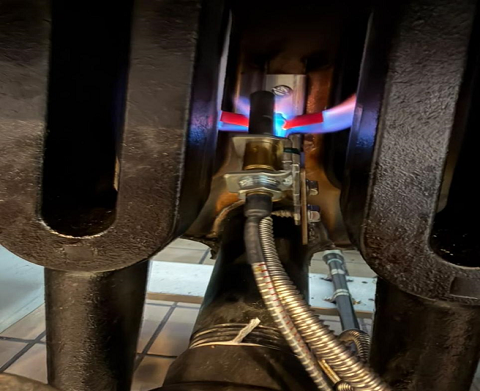
When a Jacksonville restaurant owner smelled gas near their deep fryer line, they knew something was wrong. What they didn’t know yet was that a failing gas valve was about to cause a fryer fire that could have shut their kitchen down for good. This is the story of that call, what our technicians found, and why a leaking gas valve is one of the most dangerous problems a commercial kitchen can face.
The Emergency Call: A Fryer Fire in Jacksonville
Our team at PAPPAS PARTS & SERVICE, INC received an emergency service call from a restaurant in Jacksonville, Florida after a fryer near the kitchen’s fry station had already caught fire. The kitchen staff had managed to put the flames out, but the smell of gas lingered near the unit, and management wanted answers before firing the equipment back up. This is exactly the kind of call our gas appliance repair team is trained to handle, because a fryer fire cause by a gas leak is a safety issue first and a repair issue second.
Before touching anything, our technician walked the line from the fryer’s gas connection back to the manifold, checking every union and fitting by sight and by hand. That inspection is standard procedure any time a customer reports a fire or the smell of gas, because you can’t safely diagnose a leaking gas valve until you know the rest of the gas line is sound.
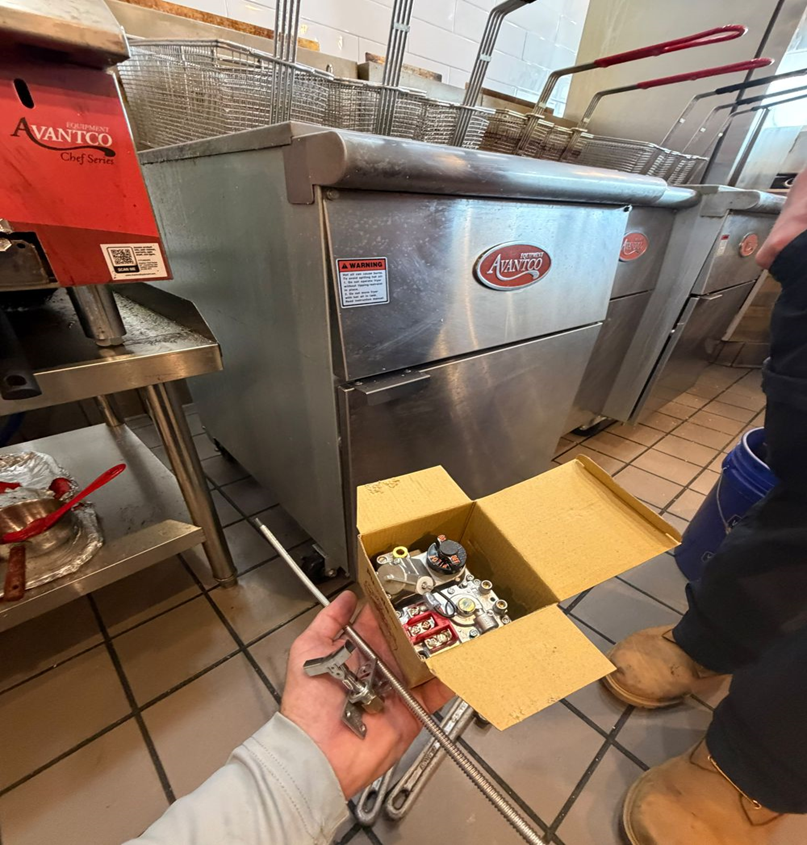
Arriving on site at the Jacksonville restaurant with the replacement gas valve, ready to inspect the fryer’s gas line.
Testing the Pilot: How We Found the Leaking Gas Valve
To confirm the source of the problem, our technician lit the fryer’s pilot light and let it burn normally. Then came the real test: we manually extinguished the pilot flame and watched the burner orifice. On a properly functioning gas valve, gas flow to the pilot and main burner should stop the moment the flame goes out and the thermocouple cools. On this fryer, gas kept coming out of the pilot assembly continuously, even with no flame present and no safety shutoff engaging.
That single test told us everything we needed to know. The gas valve’s safety shutoff mechanism had failed internally, allowing unburned gas to keep flowing into an enclosed cabinet next to an active heat source. That is precisely how a leaking gas valve turns into a fryer fire: gas accumulates in the burner compartment, finds an ignition source, and flashes. It’s also why we never assume a fire is a one-time event without confirming the gas valve itself is holding properly, the same way we approach any commercial food service equipment repair call involving gas or electrical safety systems.
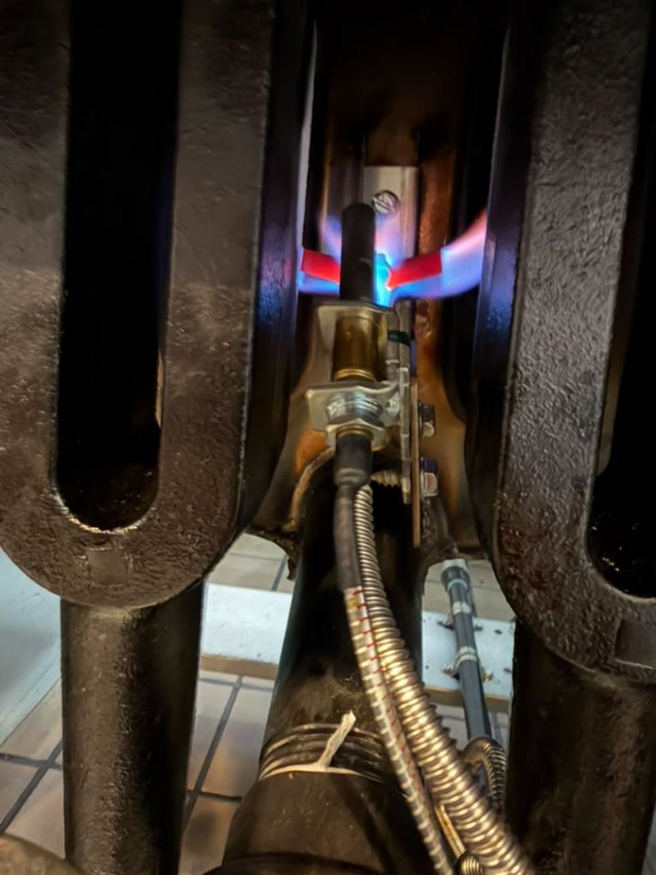
The fryer’s pilot flame during testing. Even after this flame was extinguished, gas continue flowing through the leaking gas valve.
Inspecting the Burner Assembly and Manifold
With the leak confirmed at the valve, we pulled the lower access panel and inspected the full burner assembly, including each burner tube, the manifold, and the union fitting nearest the gas valve. This is also where we found visible scorching and heat damage consistent with the reported fire, right around the union connection that feeds the valve. A loose or improperly sealed union near a gas valve is a common contributor to leaks like this one, especially on fryers that see this fryer’s volume of daily use.
Every burner, orifice, and connection point was check before we clear the unit for a new valve. We take the same methodical approach on every gas-fired appliance we service throughout the Jacksonville area, whether it’s a commercial fryer, a griddle, or a rooftop unit, because a rush inspection is how small gas leaks get missed.
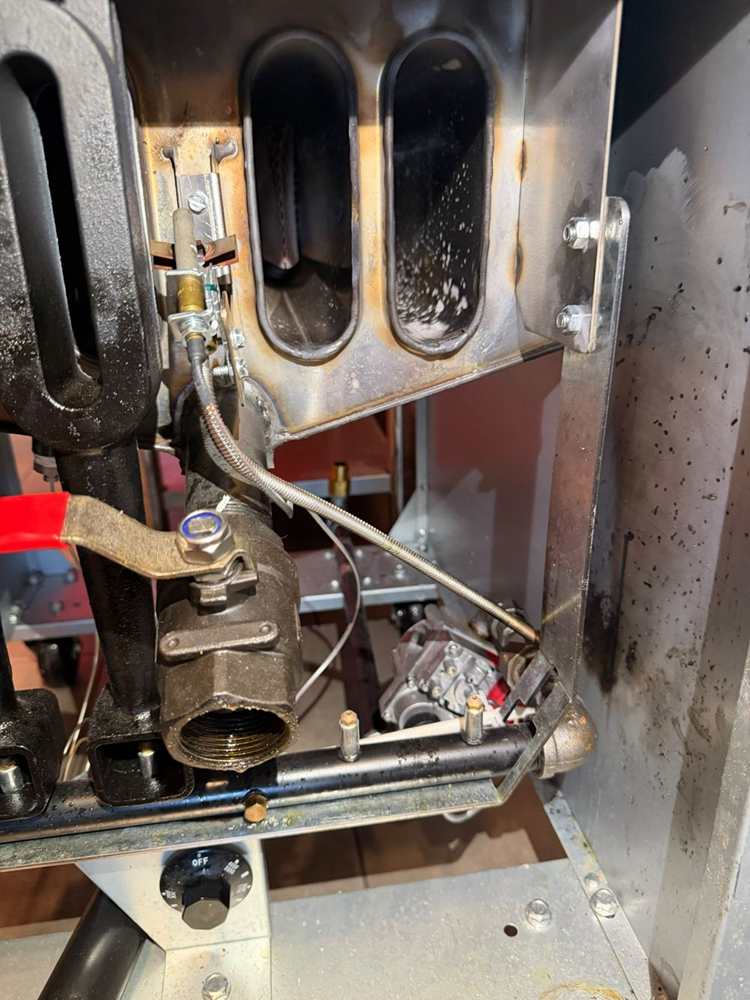
Inspecting the burner tubes and manifold for scorching and heat damage near the union fitting closest to the gas valve.
Why a Leaking Gas Valve Is So Dangerous in a Commercial Kitchen
A leaking gas valve is one of the most serious failures a commercial kitchen can experience, and it’s more common than most restaurant owners realize. Fryers, griddles, and ranges run for hours at a time, and their gas valves cycle open and closed constantly throughout a shift. Over time, the internal diaphragm and safety shutoff components inside a gas valve can wear out or fail, and when that happens, the valve can no longer guarantee gas flow stops when it should.
In this restaurant’s case, the leaking gas valve kept feeding gas into the fryer’s burner compartment even with the pilot off. That gas has nowhere to go but into the enclosed cabinet underneath the fryer, right next to hot surfaces, wiring, and grease residue. It’s a combination that can ignite in seconds. This is why we always tell restaurant owners: if you smell gas near any cooking equipment, or if a burner won’t fully shut off, treat it as an emergency and call for service immediately rather than waiting.
Smell Gas Near Your Kitchen Equipment?
Don’t Wait. Schedule Gas Appliance Repair Today →
Replacing the Gas Valve and Union Fitting
Once we confirmed the diagnosis, our technician sourced an exact-match replacement gas valve and rebuilt the union connection at the manifold. Both the old and new valves were laid out side by side to verify the port configuration, thermocouple connections, and pilot line match before installation, since even a small mismatch on a gas valve can cause the same leak all over again.
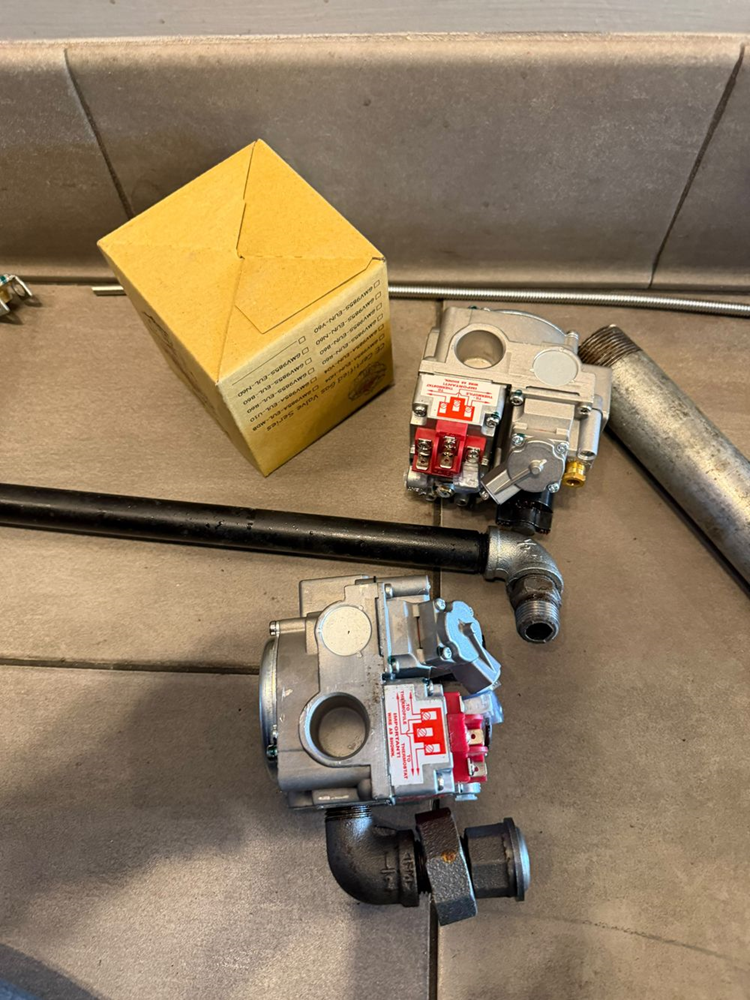
The failed gas valve (bottom) next to its exact-match replacement, confirming port and wiring configuration before installation.
We reassembled the gas line with new fittings, applied proper thread sealant rated for gas applications, and torqued every connection to spec, the same attention to detail we bring to every gas appliance installation and repair we perform. A gas valve replacement is not a job to rush, because a leaking gas valve almost always traces back to either a worn internal component or a connection that wasn’t sealed correctly the first time.
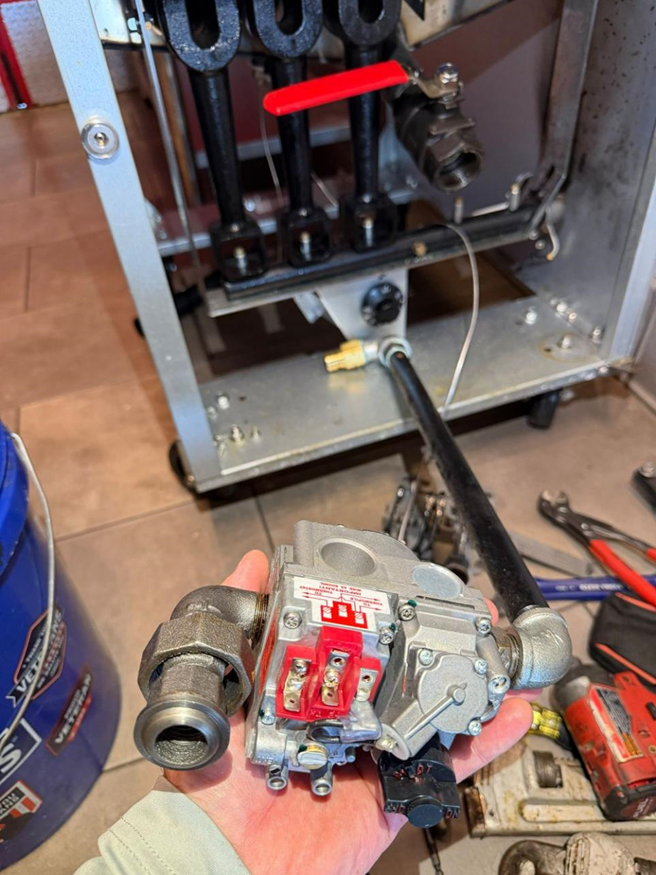
Holding the new gas valve after installation, with the fryer’s burner assembly and manifold visible in the background.
Testing for Safety Before Returning the Fryer to Service
After installation, we repeated the same test that caught the original problem. We lit the pilot, let it stabilize, and then extinguished it while watching the valve closely. This time, gas flow stopped immediately, exactly as it should. We also leak-tested every reconnected fitting along the line before giving the all-clear. A fryer is not safe to return to a working kitchen until the technician has personally verified the gas valve holds under both pilot and main burner conditions.
Running Commercial Kitchen Equipment?
We Keep It Safe and Running. See Our Commercial Food Service Equipment Repair →
This Wasn’t Our First Gas Safety Call in Jacksonville
Fryer and gas appliance failures aren’t rare in busy commercial kitchens, and they don’t always look the same. We’ve handled similar diagnostic calls before, including a job where we replaced a hot surface igniter at a Jacksonville Mexican restaurant, and another where a burned control board told us everything we needed to know about a failing refrigeration unit. In every case, the pattern is the same: a small warning sign, like a smell, a flicker, or a burner that won’t shut off, is usually the last chance to catch a problem before it becomes a fire, a walk-in failure, or a shut-down kitchen.
Preventing the Next Leaking Gas Valve Before It Starts
Most gas valve failures don’t happen overnight. They build slowly through normal wear, grease buildup, and thousands of open-close cycles. A few habits go a long way toward catching a leaking gas valve before it becomes a fryer fire:
- Schedule annual gas line and valve inspections for all fryers, griddles, and ranges.
- Report any gas smell immediately, even if it’s faint or brief.
- Watch for pilot lights that won’t stay lit or burners that are slow to shut off.
- Keep fryer cabinets and burner compartments clear of grease buildup.
Regular preventive visits are far less disruptive, and far less expensive, than an emergency fryer fire call. Our team covers gas appliance repair alongside full commercial HVAC repair and refrigeration service, so restaurant owners can rely on one company for the equipment that keeps a kitchen running.
About PAPPAS PARTS & SERVICE, INC
PAPPAS PARTS & SERVICE, INC provides commercial and residential HVAC, refrigeration, and gas appliance repair throughout Jacksonville and the surrounding service areas. From walk-in coolers to commercial fryers, our technicians are train to diagnose. The root cause of a problem, not just patch the symptom. You can see more of our completed jobs in our project gallery, and learn more about our team on our about page.
What Restaurant Owners Should Know About Gas Valve Lifespan
Commercial gas valves are built tough, but they are not built to last forever. Most manufacturers rate a commercial fryer’s gas valve for several years of daily service. But real-world lifespan depends heavily on usage volume, grease exposure, and how consistently the equipment is maintain. A fryer that runs twelve or more hours a day, seven days a week, puts far more wear on a gas valve than a unit used only during slower shifts. That’s part of why a leaking gas valve is more common in high-volume kitchens. Than owners expect, and why it’s worth having a technician check valve condition during routine service rather than waiting for a visible failure.
It’s also worth understanding that a leaking gas valve doesn’t always cause a strong, obvious gas smell right away. Small internal leaks can be intermittent, showing up only under certain temperature conditions or after the valve has cycled a certain number of times. That’s exactly why the pilot test we performed on this Jacksonville fryer is so important. Watching what happens the moment a flame is extinguish is often the clearest way to catch a gas valve that looks fine on the outside but is failing internally.
Common Warning Signs of a Failing Gas Valve
Most fryer fires caused by a leaking gas valve don’t happen without warning. Kitchen staff often notice small clues in the days or weeks before, but without training, it’s easy to dismiss them as normal equipment quirks. Some of the most common warning signs include:
- A faint gas odor near the fryer, even if it disappears quickly.
- A pilot light that takes longer than usual to go out after the knob is turned off.
- Inconsistent flame size or color at the main burner during operation.
- Soot or discoloration building up around the burner compartment or access panel.
- A clicking or hissing sound from the valve area when the fryer cycles on and off.
If your kitchen staff notices any of these signs, the safest move is to shut down that piece of equipment and call for a professional inspection. Continuing to operate a fryer with a suspected leaking gas valve. Even for one more shift, is not worth the risk to your staff, your customers, or your building.
Final Thoughts on This Jacksonville Fryer Fire
A leaking gas valve is a problem that doesn’t announce itself loudly until it’s already cause damage. In this Jacksonville restaurant’s case, a quick response and a thorough diagnostic process turned a dangerous fryer fire into a same-day repair. The equipment tested and verified safe before we left the kitchen. If your fryer, range, or any gas-fired equipment has ever shown warning signs like these, don’t wait for a second incident.
