
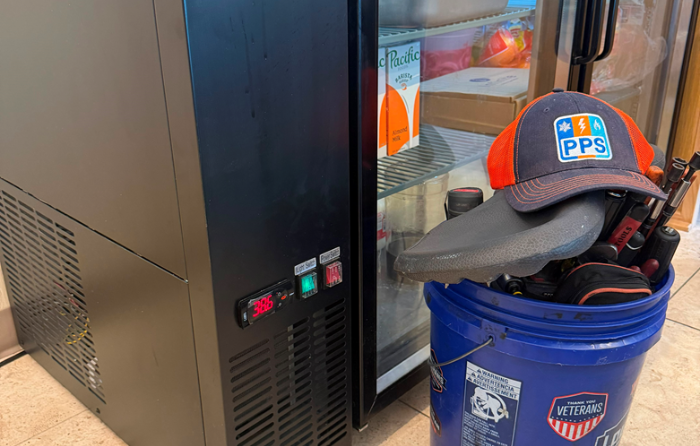
When a coffee shop owner in Atlantic Beach noticed water pooling near a brand-new reach-in refrigeration unit, the first assumption was that the equipment itself was defective. It’s a completely understandable reaction — nobody expects a brand-new cooler to leak. But as our team at PAPPAS PARTS & SERVICE, INC discovered, this refrigeration condensation issue had nothing to do with a faulty unit at all. It was a textbook example of why proper diagnostics matter more than guesswork, and why understanding the environment around a piece of equipment is just as important as understanding the equipment itself.
This case is a great reminder for restaurant and cafe owners across Northeast Florida: not every leak means a broken cooler, and not every problem needs an expensive fix. Sometimes it just needs the right eyes on it.
The Service Call: One of Each Coffee Shop, Atlantic Beach
We were dispatch to One of Each, a coffee shop in Atlantic Beach, to troubleshoot a water leak coming from a brand-new reach-in refrigeration cooler. The owner had notice condensation building up and water escaping the unit, which is never a comfortable thing to see on equipment that was just install. Water on the floor near refrigeration equipment is also a food-safety and slip-hazard concern, so a same-day response was important.
Our technicians approached the call the same way we approach every commercial refrigeration repair visit: start with a full inspection before assuming anything about the cause. That discipline is exactly what led us to the real answer behind this refrigeration condensation issue.
What Our Inspection Found
After a thorough inspection of the compressor, refrigerant lines, evaporator coil, and drain system, we confirmed something important: the cooler itself was operating correctly. The compressor was cycling properly, the refrigerant charge was accurate, and there were no leaks in the sealed system. In other words, the equipment was doing exactly what it was design to do.
So why was water leaking out? The answer wasn’t inside the cooler — it was in the air around it. We measured the building’s indoor humidity and found it was averaging 59% relative humidity. That’s significantly higher than the environment most commercial refrigeration units are engineer around. High ambient humidity means more moisture in the air, and more moisture in the air means a refrigeration unit’s evaporator coil pulls more condensate out of that air as it cools.
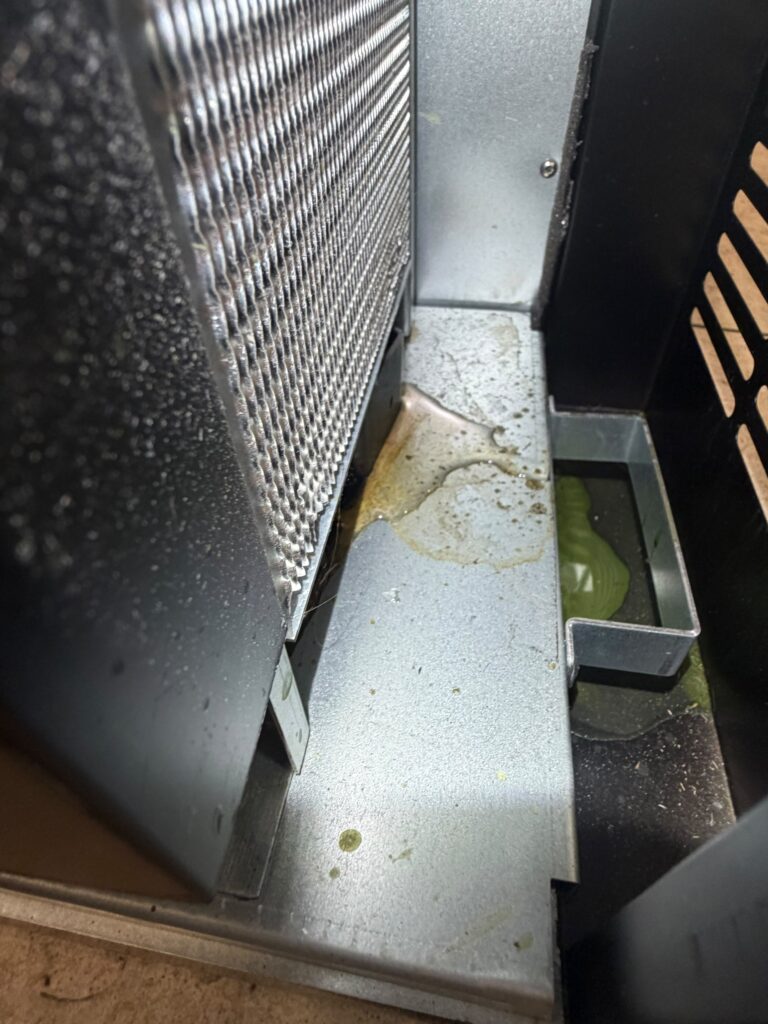
A closer look at the evaporator and drain pan area where excess condensate was collecting.
In short, this refrigeration condensation issue wasn’t cause by a mechanical failure. It was cause by a mismatch between the amount of moisture in the shop’s air and the size of the drain pan responsible for handling that moisture.
Root Cause: A Drain Pan That Was Too Small for the Job
Every reach-in cooler has a small condensate drain pan designed to collect the water that naturally forms as warm, humid air passes over the cold evaporator coil. Under normal humidity conditions, that pan can hold and evaporate the moisture without any issue. But at 59% relative humidity, the cooler was producing more condensate than the factory pan was ever design to handle.
The pan wasn’t broken. It wasn’t install incorrectly. It simply wasn’t size for the humidity levels inside this particular building. Once that water production outpaced the pan’s evaporation capacity, the excess had nowhere to go but out and onto the floor.
This is a detail that’s easy to miss if a technician assumes the leak must be a refrigerant issue or a faulty seal. It’s also a great example of why a refrigeration condensation issue can look identical to a mechanical failure on the surface, even when the root cause is environmental.
Our Solution: Engineering a Fix Instead of Replacing the System
Rather than recommending a full system replacement — which would have meant unnecessary cost, downtime, and hassle for a brand-new unit that was working perfectly fine — our technicians engineered a practical, targeted solution.
We modified the evaporative wicking material inside the drain pan, replacing it with a larger surface-area wick. This simple change allows the pan to absorb and evaporate significantly more water as warm air from the condenser passes over it. Instead of the water sitting in the pan and eventually overflowing, it now evaporates efficiently, keeping pace with the higher humidity levels inside the shop.
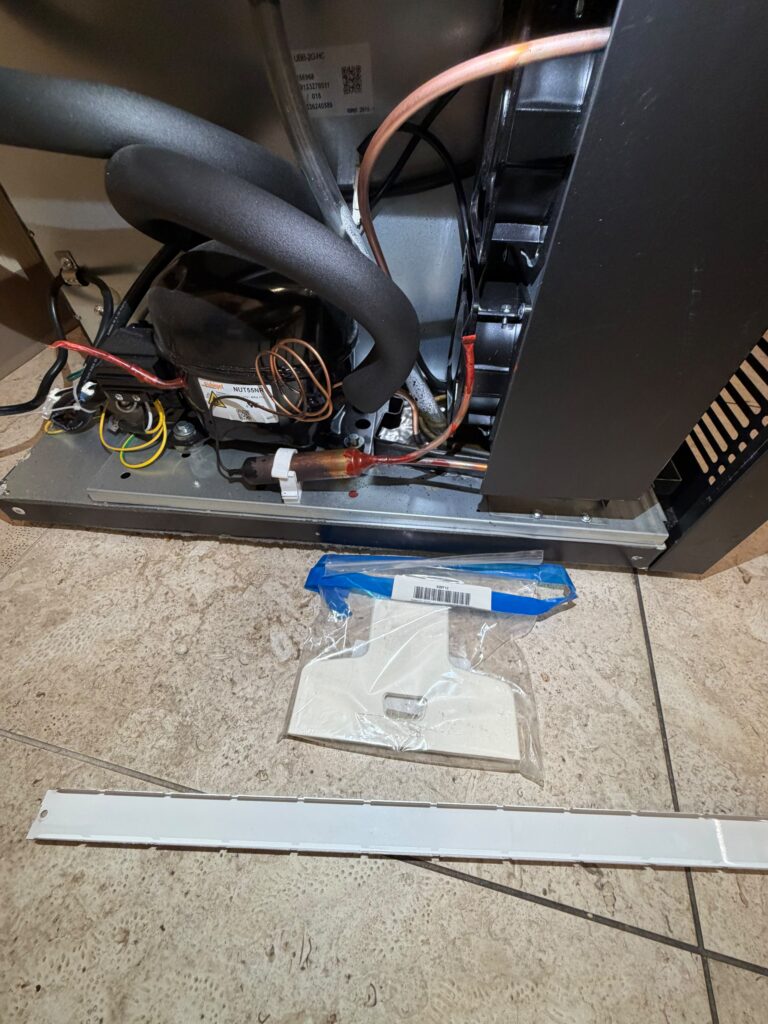
Replacement components staged and ready during the service visit.
No new compressor. No new refrigeration system. Just a smarter, better-engineered solution to a refrigeration condensation issue that was actually an environmental problem wearing a mechanical disguise.
Why This Approach Matters
This kind of diagnostic work is exactly why we encourage business owners not to jump straight to replacing equipment the moment something looks wrong. In a previous service call, we wrote about what a burned control board tells you about your refrigeration unit, and the lesson is the same here: the visible symptom rarely tells the whole story. Careful diagnosis almost always saves money compared to guessing.
Why Indoor Humidity Matters for Commercial Refrigeration
Coffee shops, bars, and restaurants often have humidity levels higher than a typical office or retail space. Espresso machines, steam wands, dishwashers, open doors, and foot traffic all add moisture to the air throughout the day. When that ambient humidity climbs into the high 50s or 60s percent range, it directly affects how much condensate any refrigeration unit produces — regardless of the brand or how new the equipment is.
This is one of the reasons a refrigeration condensation issue can show up even on equipment installed correctly and running perfectly. It’s not always a sign that something is wrong with the cooler. Sometimes it’s a sign that the surrounding environment needs to be factor into the design or the drain system needs a small adjustment to keep up.
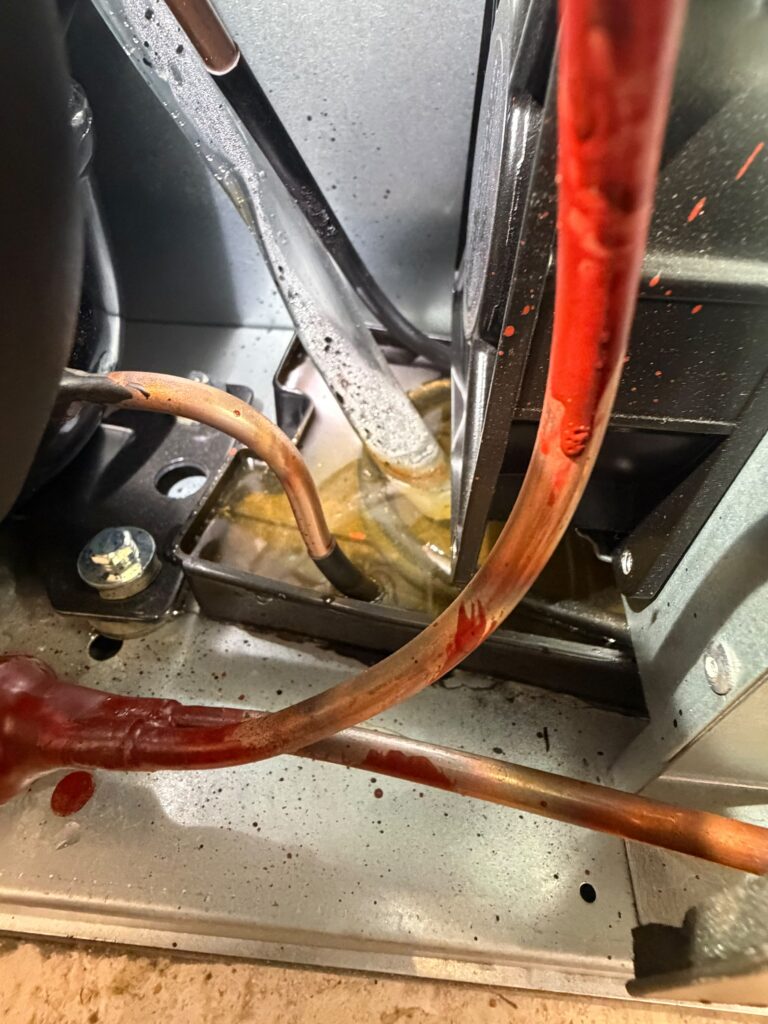
Refrigerant lines and connections inspected as part of the full system check.
For businesses dealing with similar symptoms, our team also handles broader commercial food service equipment repair, so humidity-relate issues affecting ice machines, prep coolers, and walk-ins can all be assess together as part of one visit.
| Dealing with a leak, a warm cooler, or unusual condensation in your restaurant or coffee shop? Contact Pappas Parts & Service, Inc. for a full diagnostic visit → |
The Value of Accurate Diagnosis Over Guesswork
This service call is a great example of how accurate diagnosis and creative problem-solving can save customers real time and real money. A less thorough inspection might have led to an unnecessary compressor replacement or an entirely new unit — an expensive fix for a problem that had nothing to do with the compressor at all.
We’ve seen this pattern before in other service calls too. In one recent job, we explained how we replaced a hot surface igniter at a Jacksonville Mexican restaurant after ruling out several other possible causes first. And when it comes to ductless systems, we’ve written about why proper torque on mini-split flare connections matters — another case where a small, precise detail made the difference between a lasting repair and a repeat service call.
At PAPPAS PARTS & SERVICE, INC, this is the philosophy behind every visit: we don’t just replace parts, we identify the root cause and provide effective, long-term solutions. A refrigeration condensation issue like the one at One of Each could have easily turned into an expensive, unnecessary replacement. Instead, it became a simple, lasting fix because our technicians took the time to look past the obvious symptom.
How We Confirm a Diagnosis Before Recommending Any Fix
One of the biggest mistakes in refrigeration repair is treating a symptom without confirming the actual cause first. A leaking cooler could mean a cracked drain pan, a clogged drain line, a failing door gasket, a refrigerant issue, or — as in this case — an environmental humidity problem the equipment simply wasn’t built to handle on its own. Jumping to conclusions on any of these can mean paying for a repair that never actually solves the problem.
That’s why every visit starts the same way: a full walk-through of the equipment, the electrical components, the refrigerant lines, and the surrounding environment. We check compressor amperage, verify refrigerant pressures, inspect the evaporator coil for frost or restriction, and test the drain system under real operating conditions. Only after ruling out mechanical causes do we look at environmental factors like humidity, airflow, and door traffic. In this coffee shop’s case, that process is exactly what pointed us toward the humidity reading and away from a wasted compressor or system replacement.
Signs You Might Have a Similar Refrigeration Condensation Issue
If you manage a coffee shop, restaurant, or bar and you’ve notice water around your refrigeration equipment, here are a few signs the cause may be humidity-relate rather than a mechanical failure:
- The unit is relatively new but still leaking water near the base or door
- The leak seems worse during busy hours, when doors open frequently or steam equipment is running
- The compressor and refrigerant charge have already been check and found to be normal
- The building tends to feel humid or muggy, even with air conditioning running
If any of this sounds familiar, it’s worth having a technician measure both the equipment’s performance and the ambient humidity in the space before assuming a part needs to be replace.
The compressor and condenser assembly inspected and confirmed to be operating correctly.
Serving Atlantic Beach and Surrounding Communities
PAPPAS PARTS & SERVICE, INC proudly provides commercial refrigeration, HVAC, and food service equipment repair throughout Northeast Florida, including Atlantic Beach, Jacksonville Beach, and Jacksonville. Whether it’s a coffee shop reach-in, a restaurant walk-in, or a full kitchen line, our technicians bring the same diagnostic approach to every call — check first, diagnose accurately, and fix the actual root cause.
You can see the full list of communities we serve on our service areas page, or browse our gallery to see more real service calls like this one. And if a walk-in cooler at your business needs attention, our walk-in cooler repair team can help with everything from condensation problems to full compressor replacements.
For businesses dealing with HVAC concerns alongside refrigeration questions, our HVAC contractor near me page covers repair, installation, and maintenance services across the region, and our homepage has an overview of everything we offer.
| See more of our recent service calls and repairs. Visit the Pappas Parts & Service, Inc. Gallery → |
Final Thoughts
A refrigeration condensation issue can be alarming, especially on brand-new equipment. But as this Atlantic Beach service call shows, the right diagnosis can turn what looks like a costly problem into a quick, affordable fix. Instead of replacing a perfectly good cooler, our team engineered a solution that addressed the actual cause — the building’s humidity level — and got the coffee shop back to normal operations without unnecessary expense.
This is what accurate diagnostics and experienced technicians bring to every job: less guesswork, fewer unnecessary replacements, and long-term solutions that actually solve the problem.
It’s also worth remembering that a refrigeration condensation issue doesn’t always announce itself clearly. Sometimes it looks like a puddle that only appears during busy afternoons. Sometimes it’s mistaken for a plumbing problem entirely. Whatever form it takes, the underlying lesson stays the same: get an experience set of eyes on the equipment and the environment together before spending money on a fix that may not address the real issue at all.
| Have a refrigeration condensation issue, a leak, or a cooler that isn’t performing the way it should? Read our reviews and find us on Google → |
PAPPAS PARTS & SERVICE, INC is available for commercial refrigeration, HVAC, and food service equipment repair throughout Atlantic Beach and the greater Jacksonville area. Reach out today to schedule a diagnostic visit and get an honest, accurate assessment of what your equipment actually needs.
